


What Is Thermal Expansion & Contraction in Seamless Pipes?
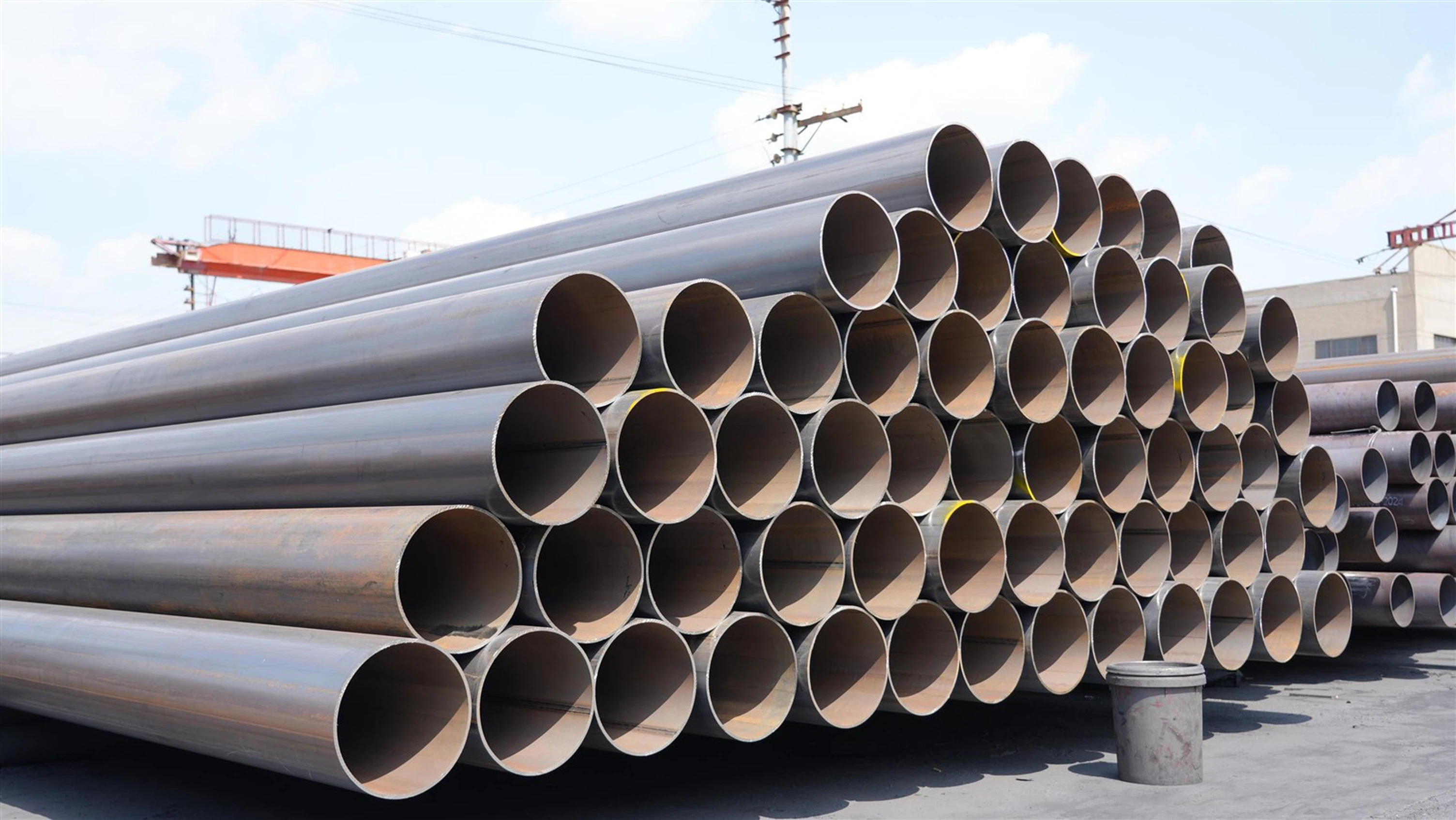
Seamless pipes are integral to industrial, commercial, and infrastructure systems, valued for their joint-free structure, high strength, and ability to transport fluids (liquids, gases, and steam) across diverse temperature ranges. Unlike welded pipes, seamless pipes have a uniform, continuous structure that enhances their pressure resistance and durability, making them ideal for high-temperature, high-pressure applications such as power plants, refineries, and boiler systems. However, like all metal components, seamless pipes are subject to thermal expansion and contraction-a natural physical phenomenon that can impact their performance and lifespan if not fully understood. This article answers key questions about thermal expansion and contraction in seamless pipes, exploring their definition, underlying mechanisms, influencing factors, and practical implications for pipe systems.
What Exactly Is Thermal Expansion & Contraction in Seamless Pipes?
Thermal expansion and contraction refer to the dimensional changes that occur in seamless pipes when exposed to fluctuations in temperature. All materials-including the carbon steel, alloy steel, and stainless steel used in seamless pipe manufacturing-expand when heated and contract when cooled. This occurs because temperature changes alter the kinetic energy of the material's atoms: as heat increases, atoms move more vigorously, spreading apart and increasing the material's volume; as heat decreases, atoms slow down, moving closer together and reducing volume.
For seamless pipes, this translates to changes in length, diameter, and even wall thickness, though length changes are the most significant and impactful. The extent of these changes is not arbitrary; it follows predictable physical principles, primarily governed by the pipe's material, the magnitude of temperature change, and the pipe's original length. Unlike welded pipes, which may have uneven thermal response due to weld joint microstructural differences, seamless pipes exhibit consistent expansion and contraction across their entire structure, thanks to their uniform manufacturing process.
What Causes Thermal Expansion & Contraction in Seamless Pipes?
The root cause of thermal expansion and contraction in seamless pipes is the change in atomic activity triggered by temperature fluctuations. At the atomic level, metals like carbon steel and stainless steel have a crystalline structure, with atoms arranged in a regular, closely packed pattern. When the pipe is heated-whether from hot fluids passing through it or exposure to high ambient temperatures-the atoms gain kinetic energy, vibrating more rapidly and pushing against one another. This atomic repulsion increases the distance between atoms, leading to an overall increase in the pipe's dimensions (expansion).
Conversely, when the pipe cools-such as when the fluid flow stops, or the ambient temperature drops-the atoms lose kinetic energy, vibrating less and moving closer together. This reduces the distance between atoms, causing the pipe to shrink back toward its original dimensions (contraction). The seamless design of these pipes ensures that this atomic-level change is consistent throughout the pipe, avoiding the stress concentrations that can occur in welded pipes at joint locations. Additionally, the manufacturing process of seamless pipes, whether hot rolling, cold drawing, or thermal expansion, influences their atomic structure and thus their thermal response characteristics.
How Is the Extent of Thermal Expansion & Contraction Measured?
The extent of thermal expansion and contraction in seamless pipes is measured using the coefficient of thermal expansion (α), a material-specific property that quantifies how much a material expands per unit length per degree of temperature change. It is typically expressed in units of per degree Celsius (°C) or Fahrenheit (°F).
Different materials used in seamless pipes have distinct coefficients of thermal expansion. For example, seamless carbon steel (commonly used in fluid transport and structural applications) has a coefficient of approximately 11.7 × 10⁻⁶ per °C (6.5 × 10⁻⁶ per °F). Stainless steel seamless pipes, such as ASTM A312 TP304L, have a higher coefficient-around 17.2 × 10⁻⁶ per °C (9.6 × 10⁻⁶ per °F) at 0-100°C-due to their alloy composition. Alloy steel seamless pipes like ASME SA213 T11, used in high-temperature boiler applications, have a coefficient of 12.5 × 10⁻⁶ per °C (6.9 × 10⁻⁶ per °F) between 20-600°C.
The total expansion or contraction (ΔL) can be calculated using a simple formula: ΔL = L₀ × α × ΔT, where L₀ is the original length of the pipe, α is the coefficient of thermal expansion, and ΔT is the temperature change (operating temperature minus ambient temperature). For instance, a 100-meter seamless carbon steel pipe installed at 20°C and operating at 320°C (a ΔT of 300°C) will expand by 35.1 millimeters (100m × 11.7 × 10⁻⁶ per °C × 300°C).
Do Different Seamless Pipe Materials Behave Differently?
Yes, the behavior of thermal expansion and contraction varies significantly between different seamless pipe materials, primarily due to differences in their chemical composition and atomic structure. This variation is critical for engineers and project managers, as it influences pipe system design and material selection for specific applications.
Carbon steel seamless pipes, the most widely used type, have a moderate coefficient of thermal expansion, making them suitable for a range of applications from residential heating to industrial fluid transport. Their uniform structure, achieved through seamless manufacturing, ensures consistent thermal response across the pipe length. Alloy steel seamless pipes, which contain additional elements like chromium, molybdenum, or nickel, are designed for high-temperature and high-pressure environments. These alloys not only enhance strength but also modify the coefficient of thermal expansion-for example, ASME SA213 T11 alloy steel has a lower coefficient than stainless steel, making it more stable in extreme heat.
Stainless steel seamless pipes, while corrosion-resistant, have a higher coefficient of thermal expansion than carbon and alloy steels. This means they expand more for the same temperature change, requiring additional considerations in system design to accommodate this movement. The manufacturing process of seamless pipes, such as thermal expansion (used for large-diameter seamless pipes), also influences their thermal behavior by refining the grain structure and reducing residual stress.
Why Is Understanding This Phenomenon Important for Seamless Pipe Systems?
Understanding thermal expansion and contraction is critical for ensuring the reliability, safety, and longevity of seamless pipe systems. Seamless pipes are often installed with fixed supports, rigid fittings, or connections to stationary equipment (e.g., boilers, pumps, tanks), which limit their ability to move freely. If the pipe expands or contracts and cannot move to accommodate these changes, it generates thermal stress-compressive stress during expansion and tensile stress during contraction.
Over time, this repeated stress can lead to a range of issues, including cracked pipe walls, leaking joints, damage to supports and fittings, and even catastrophic failure. For example, seamless carbon steel pipes transporting high-temperature steam in power plants (up to 500°C) can experience significant expansion; without proper accommodation, this can crack the pipe or loosen fittings, causing steam leaks that disrupt operations and pose safety hazards. In cold environments, seamless pipes carrying chilled fluids can contract, leading to tensile stress that causes cracks or separates joints.
Additionally, repeated cycles of expansion and contraction can cause material fatigue, weakening the pipe over time-especially in systems with frequent temperature fluctuations, such as industrial processes that start and stop regularly. For seamless pipes used in critical applications like high-pressure fluid transport, understanding thermal expansion and contraction is essential to avoid costly downtime, environmental damage, and safety risks.
How Does Thermal Expansion & Contraction Differ in Seamless vs. Welded Pipes?
While thermal expansion and contraction affect all metal pipes, the seamless design of seamless pipes results in key differences compared to welded pipes. The most significant difference is the uniformity of thermal response: seamless pipes have a continuous, uniform structure with no weld joints, meaning expansion and contraction occur evenly across the entire pipe length.
Welded pipes, by contrast, have weld joints that create microstructural differences between the joint and the base metal. These joints often have different thermal properties, leading to uneven expansion and contraction. This unevenness can cause stress concentrations at the welds, making them more prone to cracking and failure under repeated temperature cycles. Seamless pipes, with their uniform structure, avoid these stress concentrations, making them more resistant to fatigue from thermal cycling.
Additionally, seamless pipes have higher dimensional accuracy and wall thickness uniformity than welded pipes, which further enhances their consistent thermal behavior. The thermal expansion process used to manufacture large-diameter seamless pipes also helps eliminate residual stress, reducing the risk of deformation during temperature changes.
Conclusion
Thermal expansion and contraction are natural physical phenomena that affect all seamless pipes, driven by atomic-level changes in response to temperature fluctuations. Defined as the dimensional changes that occur when pipes are heated or cooled, this process is governed by the pipe's material, temperature change, and length, and can be measured using the coefficient of thermal expansion. Different seamless pipe materials-carbon steel, alloy steel, and stainless steel-exhibit distinct thermal behaviors, with variations in their expansion coefficients influenced by chemical composition and manufacturing processes. Understanding this phenomenon is critical for designing reliable pipe systems, as unaccommodated expansion and contraction can generate thermal stress, leading to fatigue, damage, and premature failure. Unlike welded pipes, seamless pipes offer uniform thermal response, making them more resilient in temperature-fluctuating environments. By grasping the fundamentals of thermal expansion and contraction, engineers and maintenance teams can optimize seamless pipe system design, ensure safe operation, and extend the pipes' service life.


