


How To Solve The Thermal Expansion & Contraction of Seamless Pipes?
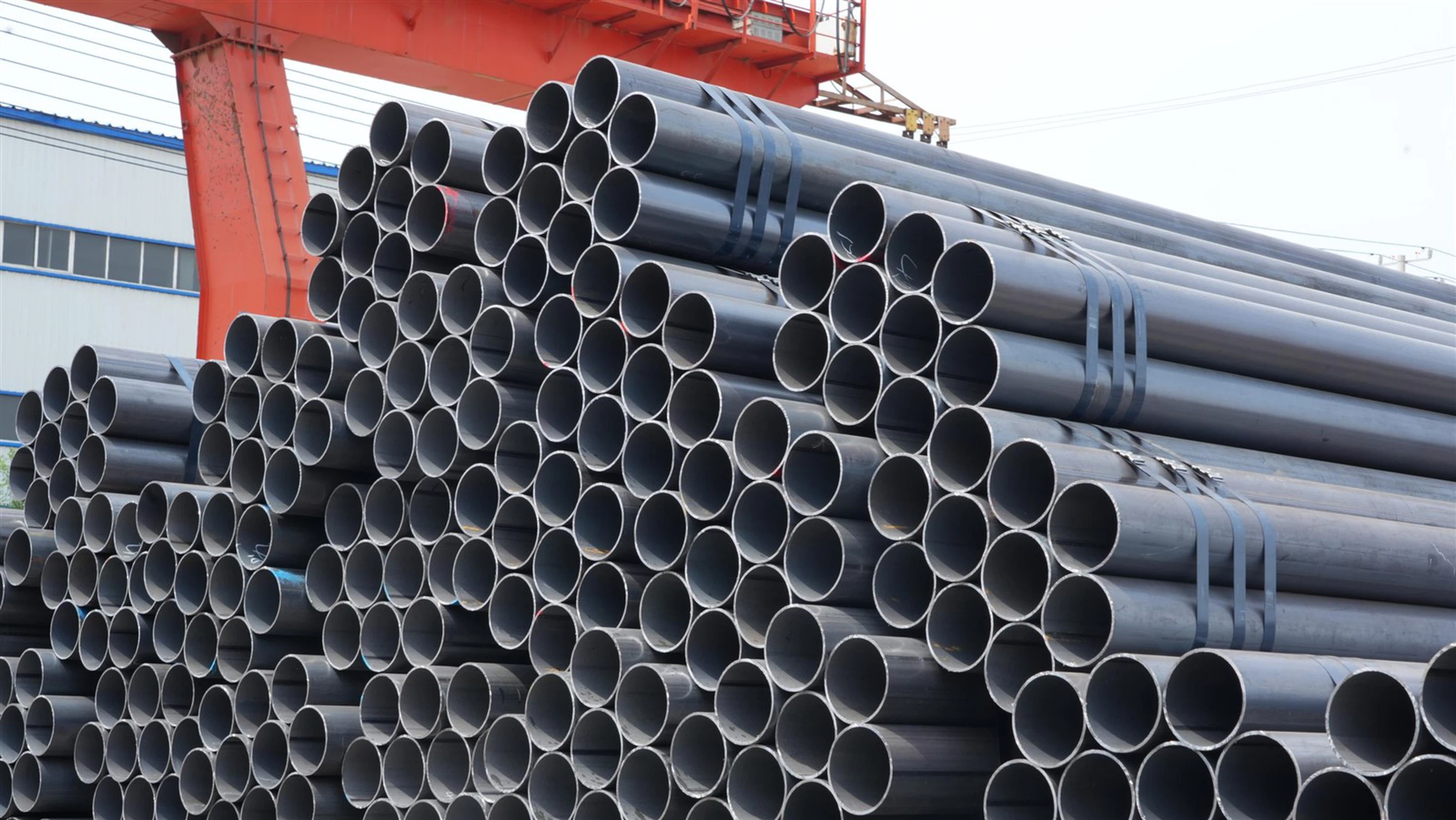
Seamless pipes are essential components in industrial, commercial, and infrastructure systems, widely used for transporting fluids (liquids, gases, and steam) across a wide range of temperatures. From power plants and refineries to residential heating systems, seamless pipes operate in environments where temperature fluctuations are inevitable. A critical challenge associated with these pipes is thermal expansion and contraction-the natural tendency of the pipe material to expand when heated and contract when cooled. If not properly managed, thermal expansion and contraction can exert excessive stress on the pipe, its fittings, and the surrounding structure, leading to leaks, cracks, premature failure, and costly downtime. Understanding how to solve the thermal expansion and contraction of seamless pipes is therefore essential for engineers, maintenance teams, and project managers to ensure system reliability, safety, and longevity. This article answers key questions about thermal expansion and contraction in seamless pipes, explores the underlying causes, and details practical solutions to mitigate their impact.
What Is Thermal Expansion & Contraction in Seamless Pipes?
Thermal expansion and contraction refer to the dimensional changes that occur in seamless pipes when they are exposed to changes in temperature. All materials expand when heated and contract when cooled, and seamless pipes-typically made of carbon steel, alloy steel, or stainless steel-are no exception. The extent of these dimensional changes depends on three key factors: the pipe's material, the temperature change (ΔT), and the pipe's length. The higher the temperature change and the longer the pipe, the greater the expansion or contraction.
For seamless carbon steel pipes, the coefficient of thermal expansion (a measure of how much a material expands per unit length per degree temperature change) is approximately 11.7 × 10⁻⁶ per °C (6.5 × 10⁻⁶ per °F). This means a 10-meter-long carbon steel seamless pipe will expand by approximately 1.17 millimeters for every 100°C (180°F) increase in temperature. While this may seem negligible, over long pipe runs (e.g., 100 meters), the expansion can be as much as 11.7 millimeters-enough to cause significant stress if not accommodated.
Thermal contraction is the reverse process: when the pipe cools, it shrinks back to its original dimensions (or close to it). However, if the pipe is constrained and cannot contract freely, it can experience tensile stress, leading to cracks or damage to fittings and supports. Both expansion and contraction pose risks, but the solutions to address them are often similar, focusing on allowing controlled movement or absorbing the stress caused by dimensional changes.
Why Is Thermal Expansion & Contraction a Problem for Seamless Pipes?
Thermal expansion and contraction become a problem for seamless pipes when the pipes are constrained-meaning they cannot move freely to accommodate dimensional changes. Seamless pipes are often installed with fixed supports, rigid fittings, or connected to stationary equipment (e.g., boilers, pumps, tanks), which limit their movement. When the pipe expands or contracts and is unable to move, it generates thermal stress-tensile stress during expansion and compressive stress during contraction.
Over time, this repeated stress can lead to a range of issues, including: cracked pipes or fittings, leaking joints, damage to pipe supports and hangers, misalignment of the pipe system, and even damage to connected equipment (e.g., pumps, valves). In extreme cases, excessive thermal stress can cause catastrophic pipe failure, leading to fluid leaks, environmental damage, and safety hazards (especially in systems transporting hazardous or high-temperature fluids like steam or chemicals).
For example, in a power plant, seamless carbon steel pipes transporting high-temperature steam (up to 500°C) can experience significant expansion. If these pipes are not equipped with expansion solutions, the thermal stress can crack the pipe walls or loosen fittings, resulting in steam leaks that disrupt operations and pose burn risks to workers. Similarly, in cold environments, seamless pipes carrying chilled fluids can contract, leading to tensile stress that causes cracks or separates joints.
Another issue is fatigue: repeated cycles of expansion and contraction can weaken the pipe material over time, making it more prone to failure. This is particularly problematic in systems with frequent temperature fluctuations, such as industrial processes that start and stop regularly.
What Factors Influence the Severity of Thermal Expansion & Contraction?
The severity of thermal expansion and contraction in seamless pipes is influenced by several key factors, which must be considered when designing solutions to address the problem. Understanding these factors helps engineers select the most effective mitigation strategies for a given application.
First, pipe material plays a critical role. Different materials have different coefficients of thermal expansion. For example, stainless steel has a higher coefficient (16.9 × 10⁻⁶ per °C) than carbon steel (11.7 × 10⁻⁶ per °C), meaning stainless steel seamless pipes will expand more for the same temperature change. Alloy steel pipes, often used in high-temperature applications, may have lower coefficients than stainless steel but higher than carbon steel, depending on the alloy composition.
Second, temperature change (ΔT) is a major factor. The greater the difference between the pipe's operating temperature and its ambient (installation) temperature, the more significant the expansion or contraction. Pipes used in high-temperature applications (e.g., steam lines, refinery processes) experience larger temperature changes and thus more severe expansion than pipes used at ambient temperatures (e.g., water supply lines).
Third, pipe length directly impacts the total expansion or contraction. Longer pipe runs have more material to expand, so the total dimensional change is greater. A 100-meter seamless pipe will expand 10 times more than a 10-meter pipe under the same temperature change.
Fourth, pipe constraints affect how much the pipe can move. Pipes with rigid supports, fixed ends, or connections to stationary equipment have less freedom to move, leading to higher thermal stress. Conversely, pipes with flexible supports or expansion devices can move more freely, reducing stress.
Finally, operating cycle matters. Pipes that experience frequent temperature fluctuations (e.g., start-up and shutdown cycles) are more prone to fatigue from repeated expansion and contraction, increasing the need for effective mitigation strategies.
What Are the Most Effective Solutions to Mitigate Thermal Expansion & Contraction?
There are several practical solutions to solve the problem of thermal expansion and contraction in seamless pipes, each designed to either allow controlled movement of the pipe or absorb the stress caused by dimensional changes. The choice of solution depends on factors such as pipe material, length, temperature change, and installation environment. Below are the most common and effective methods:
1. Use Expansion Joints: How Do They Work?
Expansion joints are specialized devices installed in seamless pipe systems to absorb thermal expansion and contraction by allowing controlled movement. They are one of the most widely used solutions, particularly for long pipe runs and high-temperature applications. Expansion joints come in several types, including bellows expansion joints, slip expansion joints, and ball-and-socket expansion joints, each suited to different scenarios.
Bellows expansion joints are the most common type for seamless pipes. They consist of a flexible, corrugated metal bellows (typically made of stainless steel or alloy steel) that can stretch, compress, or bend to accommodate expansion and contraction. When the pipe expands, the bellows compresses; when it contracts, the bellows stretches. This movement absorbs the thermal stress, preventing it from transferring to the pipe, fittings, or connected equipment.
Slip expansion joints (also called telescopic joints) work by allowing one section of the pipe to slide inside another, accommodating linear expansion and contraction. They are ideal for long, straight pipe runs where linear movement is the primary concern. Ball-and-socket expansion joints allow for both linear and angular movement, making them suitable for pipe systems with bends or misalignments.
When installing expansion joints, it is important to position them correctly (typically near fixed supports or changes in pipe direction) and ensure they have enough space to move freely. Improper installation can reduce their effectiveness and lead to premature failure.
2. Install Pipe Loops: Are They a Practical Solution?
Pipe loops (also called expansion loops) are another effective solution for mitigating thermal expansion and contraction, particularly for medium-length pipe runs. A pipe loop is a U-shaped or hairpin bend in the pipe that provides extra length to accommodate expansion. When the pipe expands, the loop bends slightly, absorbing the extra length without generating excessive stress. When the pipe contracts, the loop straightens back, preventing tensile stress.
Pipe loops are simple, cost-effective, and require minimal maintenance, making them a popular choice for residential, commercial, and industrial applications. They are particularly well-suited for seamless carbon steel pipes used in heating systems, water supply lines, and low-pressure steam lines.
The key to designing an effective pipe loop is calculating the required loop size based on the pipe's length, temperature change, and material. The loop must be large enough to accommodate the total expansion without exceeding the pipe's bending capacity. For example, a 50-meter carbon steel pipe with a temperature change of 100°C would require a loop of sufficient size to absorb 5.85 millimeters of expansion (50m × 11.7 × 10⁻⁶ per °C × 100°C).
Pipe loops are best installed in areas where there is enough space to accommodate the bend, as they require more physical space than expansion joints. They are also not ideal for high-pressure or high-temperature applications where the pipe's bending capacity may be exceeded.
3. Use Flexible Pipe Supports: How Do They Help?
Flexible pipe supports (also called slide supports or roller supports) are designed to allow the pipe to move freely along its length, reducing the constraints that cause thermal stress. Unlike fixed supports, which hold the pipe in place, flexible supports allow the pipe to expand and contract linearly without resistance.
Roller supports consist of rollers or wheels that the pipe rests on, allowing it to slide smoothly as it expands or contracts. Slide supports use a low-friction surface (e.g., Teflon) to minimize resistance to movement. These supports are typically installed along long pipe runs, between fixed supports, to allow controlled linear movement.
Flexible supports are often used in conjunction with expansion joints or pipe loops to maximize movement and reduce stress. For example, in a long pipe run, flexible supports can be installed at intervals to allow the pipe to move freely, while an expansion joint at the end absorbs any remaining movement. This combination ensures that the pipe is not constrained, minimizing thermal stress.
It is important to select the right type of flexible support for the application. For high-temperature pipes, supports must be made of heat-resistant materials to prevent damage. Additionally, supports must be properly aligned to ensure the pipe moves smoothly and does not become misaligned.
4. Implement Temperature Compensators: What Are They and How Do They Work?
Temperature compensators (also called expansion compensators) are devices that absorb thermal expansion and contraction by converting linear movement into another form of motion (e.g., rotational or angular movement). They are particularly useful in pipe systems where space is limited and expansion joints or pipe loops are not feasible.
One common type of temperature compensator is the hinge compensator, which uses a hinge mechanism to allow angular movement, absorbing linear expansion. Another type is the universal compensator, which allows both angular and lateral movement, making it suitable for complex pipe systems with multiple bends.
Temperature compensators are often used in industrial applications where pipes are installed in tight spaces (e.g., inside buildings or equipment) and cannot accommodate the space required for pipe loops or large expansion joints. They are also useful in high-pressure systems, as they can handle higher pressures than some expansion joints.
Like other solutions, temperature compensators must be properly sized and installed to ensure they can absorb the required amount of expansion or contraction. They also require regular maintenance to ensure the hinge or other moving parts remain functional and do not seize up.
How To Calculate the Required Expansion Accommodation for Seamless Pipes?
To select the right solution for thermal expansion and contraction, it is first necessary to calculate the total amount of expansion or contraction the pipe will experience. This calculation ensures that the chosen solution (expansion joint, pipe loop, etc.) can accommodate the dimensional change without generating excessive stress. The formula for calculating thermal expansion is relatively simple:
ΔL = L₀ × α × ΔT
Where: - ΔL = Total expansion or contraction (in millimeters) - L₀ = Original length of the pipe (in meters) - α = Coefficient of thermal expansion of the pipe material (per °C) - ΔT = Temperature change (°C) = Operating temperature - Ambient temperature
For example, a 100-meter seamless carbon steel pipe (α = 11.7 × 10⁻⁶ per °C) installed at an ambient temperature of 20°C and operating at 320°C would experience a temperature change of 300°C. The total expansion would be: ΔL = 100m × 11.7 × 10⁻⁶ per °C × 300°C = 35.1 millimeters. This means the pipe will expand by 35.1 millimeters when heated, and contract by the same amount when cooled.
Once the total expansion (ΔL) is calculated, engineers can select the appropriate solution. For example, an expansion joint with a movement capacity of at least 35.1 millimeters would be required for this pipe. For pipe loops, the loop size can be calculated based on the pipe's bending radius and the required expansion.
It is important to account for a safety margin when calculating expansion accommodation, as temperature changes may be higher than expected, and pipe lengths may vary slightly during installation. A safety margin of 10–20% is typically recommended to ensure the solution can handle unexpected expansion or contraction.
What Are the Installation and Maintenance Considerations for These Solutions?
Even the most effective solutions for thermal expansion and contraction will fail if they are not properly installed and maintained. Below are key considerations for installation and maintenance to ensure long-term effectiveness:
For expansion joints: - Install expansion joints in the correct position (near fixed supports, changes in pipe direction, or equipment connections). - Ensure the joint is aligned properly to allow free movement; misalignment can cause binding and premature failure. - Avoid overloading the joint with external forces (e.g., weight from the pipe or fittings), which can reduce its movement capacity. - Regularly inspect the joint for damage (e.g., cracks, leaks, or corrosion) and replace it if necessary. For bellows expansion joints, check for fatigue in the corrugations.
For pipe loops: - Ensure the loop is sized correctly to accommodate the calculated expansion; an undersized loop will not absorb enough movement, leading to stress. - Install the loop in a location where it has enough space to bend freely; avoid placing loops near walls, equipment, or other obstacles. - Support the loop properly to prevent sagging, which can reduce its effectiveness and cause additional stress. - Inspect the loop regularly for cracks or damage, particularly at the bend points, which are prone to fatigue.
For flexible supports: - Install supports at the correct intervals to allow free movement; too few supports can cause the pipe to sag, while too many can restrict movement. - Ensure the supports are aligned properly to prevent the pipe from binding or misaligning as it moves. - Use heat-resistant materials for supports in high-temperature applications to prevent damage from heat. - Regularly lubricate roller supports or replace low-friction surfaces to ensure smooth movement.
For temperature compensators: - Ensure the compensator is sized to handle the calculated expansion and operating pressure. - Install the compensator with the correct orientation to allow the intended movement (angular, lateral, etc.). - Regularly inspect the compensator's moving parts (e.g., hinges, bearings) for wear or corrosion and lubricate them as needed. - Check for leaks around the compensator, as worn seals can lead to fluid loss and reduced effectiveness.
What Are the Common Mistakes to Avoid When Addressing Thermal Expansion & Contraction?
When solving thermal expansion and contraction in seamless pipes, there are several common mistakes that engineers and maintenance teams should avoid to prevent pipe damage and system failure:
1. Underestimating the amount of expansion or contraction: Failing to calculate the total expansion correctly can lead to selecting an undersized solution (e.g., an expansion joint with insufficient movement capacity), which will not absorb the thermal stress and may cause pipe failure.
2. Overconstraining the pipe: Installing too many fixed supports or rigid fittings restricts the pipe's movement, leading to excessive thermal stress. It is important to balance fixed supports (to prevent misalignment) with flexible supports (to allow movement).
3. Improper installation of expansion devices: Misaligning expansion joints, pipe loops, or compensators can cause binding, reducing their ability to absorb movement. It is critical to follow manufacturer guidelines for installation.
4. Neglecting maintenance: Expansion devices and flexible supports require regular inspection and maintenance to remain functional. Neglecting to check for damage, corrosion, or wear can lead to premature failure of the solution, putting the pipe system at risk.
5. Using the wrong solution for the application: For example, using a pipe loop in a high-pressure, high-temperature system where an expansion joint would be more suitable can lead to pipe damage. It is important to select a solution that matches the pipe's material, temperature, pressure, and length.
Conclusion
Thermal expansion and contraction are natural phenomena that pose significant challenges to seamless pipe systems, but with the right solutions and proper planning, their impact can be effectively mitigated. The key to solving thermal expansion and contraction is understanding the factors that influence it (pipe material, temperature change, length, and constraints) and selecting the appropriate solution-whether expansion joints, pipe loops, flexible supports, or temperature compensators. By calculating the required expansion accommodation, installing solutions correctly, and maintaining them regularly, engineers and maintenance teams can prevent thermal stress, leaks, and premature pipe failure, ensuring the reliability and longevity of seamless pipe systems. Whether in industrial power plants, commercial buildings, or residential infrastructure, addressing thermal expansion and contraction is essential for safe, efficient, and cost-effective operation. By avoiding common mistakes and following best practices, stakeholders can protect their investment and ensure seamless pipes perform optimally for their intended lifespan.


