


What Causes Thermal Expansion & Contraction in Seamless Pipes?
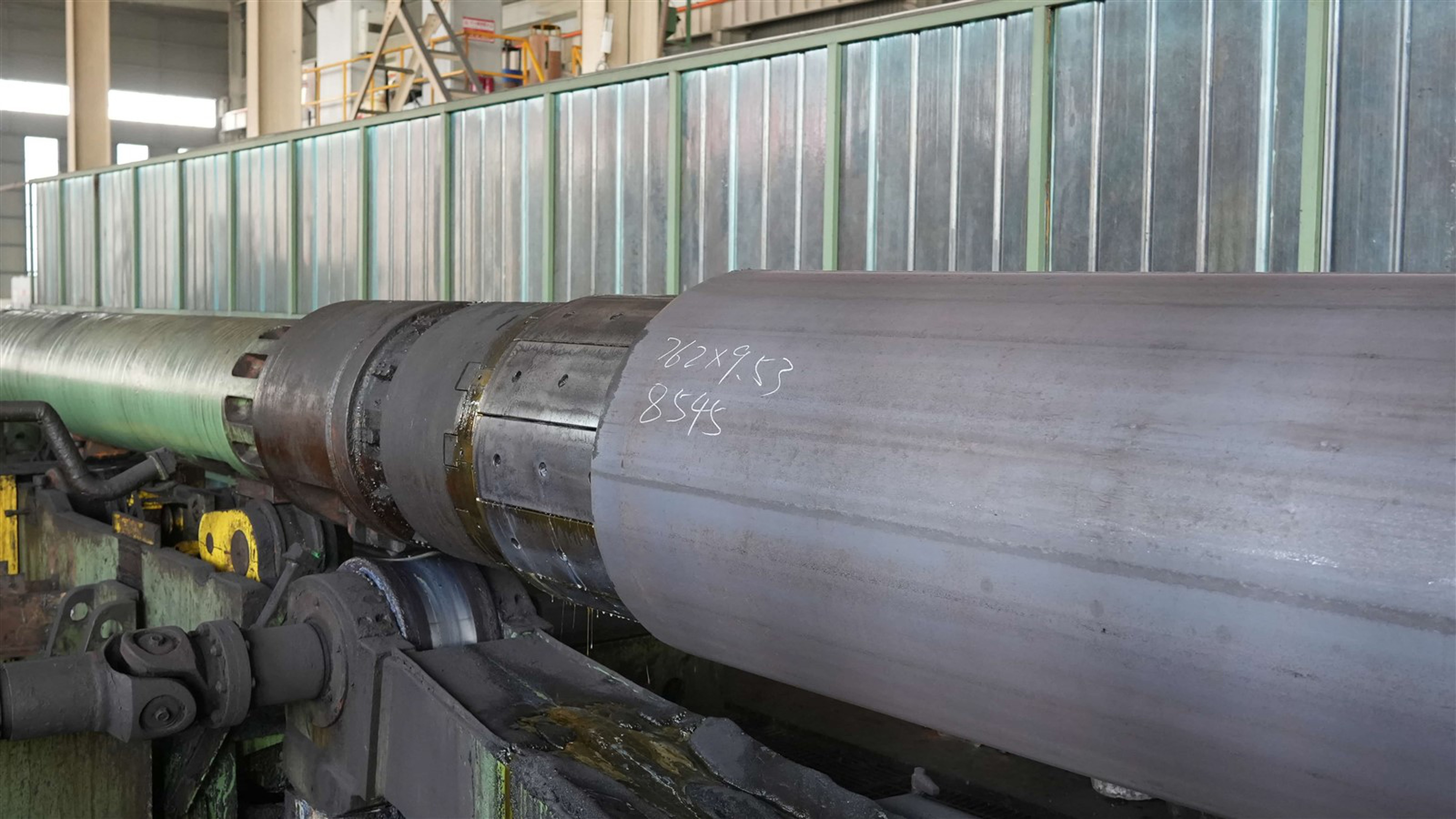
Seamless pipes are essential components in industrial, commercial, and infrastructure systems, valued for their joint-free structure, high strength, and ability to transport fluids across diverse temperature ranges. From power plant steam lines to residential heating systems, these pipes regularly experience temperature fluctuations, which trigger thermal expansion and contraction-dimensional changes that can impact system performance if not understood. While thermal expansion and contraction are natural physical phenomena, their causes in seamless pipes are rooted in atomic behavior, material properties, environmental conditions, and operational factors. This article answers key questions about the causes of thermal expansion and contraction in seamless pipes, exploring the scientific principles, material influences, and real-world factors that drive these dimensional changes.
What Is the Fundamental Scientific Cause of Thermal Expansion & Contraction?
The fundamental cause of thermal expansion and contraction in seamless pipes lies in the behavior of atoms at the microscopic level. All metals used in seamless pipe manufacturing-including carbon steel, alloy steel, and stainless steel-have a crystalline atomic structure, where atoms are arranged in a regular, closely packed pattern. Atoms are constantly in motion, and their kinetic energy (movement) increases or decreases with changes in temperature.
When a seamless pipe is heated, whether by hot fluids passing through it or exposure to high ambient temperatures, the atoms gain kinetic energy and vibrate more vigorously. This increased vibration creates greater distance between adjacent atoms, as the atoms push against one another with more force. This atomic-level separation translates to a macroscopic increase in the pipe's dimensions-thermal expansion. Conversely, when the pipe cools, the atoms lose kinetic energy, vibrate less, and move closer together, reducing the distance between them and causing the pipe to shrink-thermal contraction.
This atomic behavior is consistent across all seamless pipe materials, though the extent of expansion and contraction varies based on material properties. The seamless design of these pipes ensures uniform atomic distribution, leading to consistent dimensional changes across the entire pipe length, unlike welded pipes where weld joints may disrupt atomic uniformity.
How Do Material Properties Influence Thermal Expansion & Contraction?
Material properties are a key factor in determining the extent and rate of thermal expansion and contraction in seamless pipes, with the coefficient of thermal expansion (α) being the most critical property. The coefficient of thermal expansion is a material-specific value that quantifies how much a material expands per unit length per degree of temperature change.
Different materials used in seamless pipes have distinct coefficients. For example, seamless carbon steel- the most widely used type-has a moderate coefficient of approximately 11.7 × 10⁻⁶ per °C. Stainless steel seamless pipes, such as ASTM A312 TP304L, have a higher coefficient (around 17.2 × 10⁻⁶ per °C) due to their alloy composition, meaning they expand more for the same temperature change. Alloy steel seamless pipes, designed for high-temperature applications, often have lower coefficients than stainless steel; for instance, ASME SA213 T11 alloy steel has a coefficient of 12.5 × 10⁻⁶ per °C.
Other material properties also play a role. The atomic bonding strength of the metal affects how easily atoms can move apart when heated: metals with stronger atomic bonds (e.g., alloy steel) have lower coefficients of expansion, while those with weaker bonds (e.g., some stainless steels) expand more. Additionally, the crystalline structure of the metal, influenced by the seamless manufacturing process (hot rolling, cold drawing), can slightly alter thermal response by affecting atomic mobility.
What Role Does Temperature Change Play in Triggering These Changes?
Temperature change (ΔT)-the difference between the seamless pipe's operating temperature and its ambient (installation) temperature-is the primary trigger for thermal expansion and contraction. The extent of dimensional change is directly proportional to the magnitude of the temperature change: the larger the ΔT, the greater the expansion or contraction.
For example, a seamless carbon steel pipe installed at 20°C (ambient temperature) and operating at 320°C (operating temperature) experiences a ΔT of 300°C. Using the formula ΔL = L₀ × α × ΔT (where L₀ is the pipe's original length), a 100-meter pipe would expand by 35.1 millimeters. If the same pipe operates at 170°C (ΔT of 150°C), the expansion would be cut in half, to 17.55 millimeters.
The rate of temperature change also matters. Rapid temperature fluctuations-such as sudden heating or cooling when a system starts up or shuts down-can cause more abrupt dimensional changes, increasing stress on the pipe. Gradual temperature changes, by contrast, allow the pipe to adjust more slowly, reducing the risk of damage. Seamless pipes in high-temperature applications (e.g., steam lines) face the largest temperature changes and thus the most significant expansion and contraction.
Do Seamless Pipe Manufacturing Processes Contribute to Thermal Behavior?
Yes, the manufacturing processes used to produce seamless pipes play a role in their thermal expansion and contraction behavior, primarily by influencing the pipe's atomic structure and residual stress.
Seamless pipes are manufactured using processes like hot rolling, cold drawing, or thermal expansion. Hot rolling involves heating a steel billet to high temperatures (above 1000°C) and shaping it into a pipe. This process refines the metal's crystalline structure, reducing internal defects and ensuring uniform atomic distribution, which leads to consistent thermal response. Cold drawing, by contrast, involves pulling a hot-rolled pipe through a die at room temperature, which can introduce residual stress into the pipe. This residual stress can slightly alter thermal expansion, as the pipe may expand or contract unevenly until the stress is released over time.
Thermal expansion manufacturing (used for large-diameter seamless pipes) involves heating a smaller pipe and expanding it to the desired diameter. This process further relieves residual stress and ensures uniform wall thickness, enhancing consistent thermal behavior. Welded pipes, by comparison, have uneven microstructures at weld joints, leading to inconsistent thermal expansion- a key difference that makes seamless pipes' thermal behavior more predictable.
What Environmental Factors Contribute to Thermal Expansion & Contraction?
Environmental factors play a significant role in triggering and amplifying thermal expansion and contraction in seamless pipes, especially for outdoor installations or pipes exposed to varying ambient conditions.
Ambient temperature fluctuations are a major environmental cause. Seamless pipes installed outdoors are exposed to daily and seasonal temperature changes-hotter during the day, cooler at night, and varying drastically between seasons. For example, a seamless pipe used in outdoor water supply lines may experience a ΔT of 40°C or more between summer and winter, leading to significant expansion and contraction.
Other environmental factors include exposure to direct sunlight, which can heat the pipe's exterior beyond the temperature of the fluid inside, increasing expansion. Wind and precipitation can also accelerate cooling, triggering more rapid contraction. In industrial environments, exposure to hot exhaust gases, furnaces, or cold storage areas can create extreme temperature changes, further driving thermal dimensional changes.
Humidity and corrosion, while not direct causes of thermal expansion and contraction, can indirectly affect thermal behavior. Corrosion weakens the pipe's material, altering its atomic structure and potentially changing its coefficient of thermal expansion over time.
How Do Operational Conditions Affect Thermal Expansion & Contraction?
Operational conditions-specifically the temperature and properties of the fluid being transported-are critical causes of thermal expansion and contraction in seamless pipes, as they directly control the pipe's internal temperature.
The temperature of the transported fluid is the primary operational trigger. Seamless pipes carrying high-temperature fluids (e.g., steam, hot oil, or molten chemicals) experience significant expansion, while those carrying chilled fluids (e.g., refrigerants, cold water) undergo contraction. For example, seamless pipes in power plant boiler systems transport steam at 500°C or higher, leading to substantial expansion that must be accommodated.
Fluid flow rate also plays a role. High-velocity fluids transfer heat more efficiently to the pipe wall, leading to faster temperature changes and more rapid expansion or contraction. Conversely, low-velocity fluids transfer heat more slowly, resulting in gradual dimensional changes. The properties of the fluid-such as its specific heat capacity-also influence how much heat is transferred to the pipe, affecting the rate of thermal change.
Operational cycles (start-up, shutdown, and steady operation) further contribute. Frequent start-up and shutdown cycles cause repeated temperature fluctuations, leading to repeated expansion and contraction, which can influence the pipe's long-term thermal behavior and material fatigue.
Conclusion
Thermal expansion and contraction in seamless pipes are caused by a combination of microscopic atomic behavior, material properties, temperature changes, manufacturing processes, environmental conditions, and operational factors. At the core, these dimensional changes stem from the kinetic energy of atoms, which increases with heat and decreases with cold, leading to atomic separation or compression. Material properties-especially the coefficient of thermal expansion-determine the extent of these changes, while temperature change (ΔT) is the primary trigger. Seamless manufacturing processes ensure uniform atomic distribution, making their thermal behavior more predictable than welded pipes. Environmental factors like ambient temperature fluctuations and operational conditions such as fluid temperature and flow rate further amplify these changes. Understanding these causes is essential for designing seamless pipe systems that can accommodate thermal movement, prevent stress and damage, and ensure long-term reliability. By recognizing the multiple factors that drive thermal expansion and contraction, engineers and maintenance teams can optimize pipe design, select appropriate materials, and implement effective mitigation strategies.


