


3PE vs. FBE: How to Choose the Best Anti-Corrosion Coating for Your Steel Pipes?
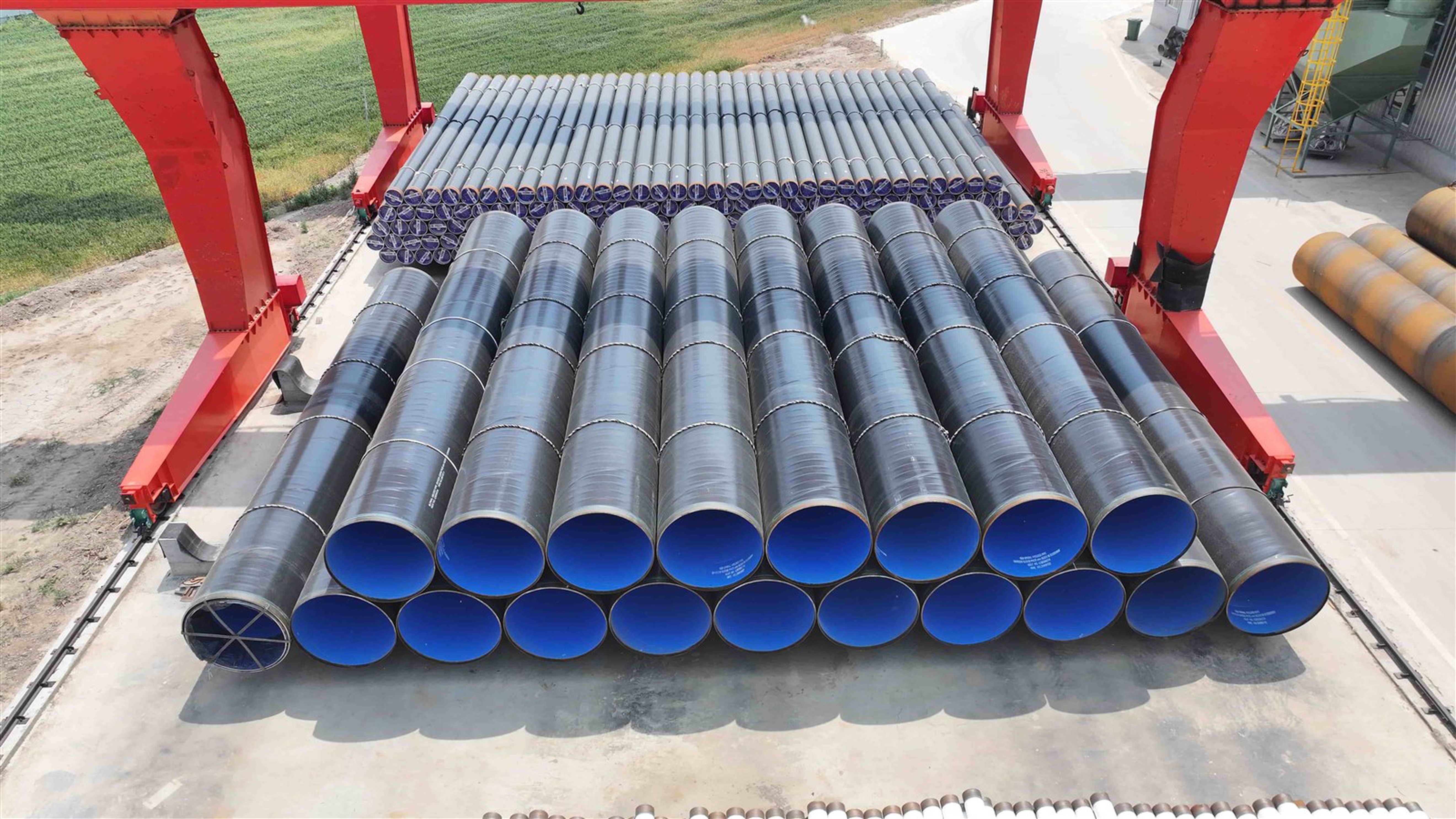
Steel pipe corrosion has always been a core problem restricting the safe operation of oil, gas, municipal water supply and industrial pipeline systems. Uncontrolled corrosion will cause pipe wall thinning, medium leakage, pipeline failure and even major safety accidents, bringing huge economic losses and environmental pollution risks. With the continuous upgrading of pipeline engineering standards, traditional single-layer anti-corrosion coatings can no longer meet the demand of long-term and harsh working conditions. Among numerous modern anti-corrosion technologies, 3PE (Three-Layer Polyethylene) and FBE (Fusion Bonded Epoxy) have become the two most mainstream and high-performance anti-corrosion coating materials for steel pipes, occupying the dominant position in global pipeline engineering construction.
Although both 3PE and FBE coatings can provide excellent anti-corrosion protection for steel substrates, they differ greatly in structural composition, anti-corrosion mechanism, physical performance, environmental adaptability and construction requirements. In actual engineering procurement and design, many practitioners confuse the two coatings, resulting in unreasonable material selection, shortened pipeline service life and increased project costs. This article adopts question-based subheadings to comprehensively compare 3PE and FBE coatings in multiple dimensions, systematically analyzing their advantages, defects and applicable scenarios, so as to provide scientific and targeted selection guidance for steel pipe anti-corrosion engineering.
What Are the Basic Definitions and Structural Compositions of 3PE and FBE Coatings?
To distinguish the application values of 3PE and FBE coatings, it is necessary to start with their basic definitions and structural designs, which are the root of all performance differences. 3PE is a composite multi-layer anti-corrosion coating system developed on the basis of single-layer polyethylene coating, belonging to a multi-structure polymer anti-corrosion technology. Its complete coating system consists of three functional layers with independent roles and complementary performances. The innermost layer is epoxy powder primer, which is directly bonded to the polished steel pipe matrix. This layer has strong chemical adhesion, which can effectively eliminate the gap between the coating and the steel surface and resist chemical corrosion invasion. The middle layer is a special adhesive copolymer layer, acting as a transition bonding medium, solving the problem of poor compatibility between epoxy primer and polyethylene outer layer, and improving the overall integrity of the coating. The outermost layer is a high-density polyethylene protective layer, which undertakes physical protection functions such as wear resistance, impact resistance and waterproof isolation.
FBE coating is a single-layer integral anti-corrosion coating formed by fusion bonding of epoxy powder, belonging to a single-structure high-purity epoxy anti-corrosion technology. Different from the three-layer composite structure of 3PE, FBE coating is formed by electrostatic spraying of dry epoxy powder on the preheated steel pipe surface. Under high-temperature conditions, the epoxy powder melts, flows and solidifies integrally, forming a uniform, compact and seamless single protective film. There is no layered structure inside the FBE coating, and the whole coating is a unified high-purity epoxy resin material. Its structural design abandons the multi-layer stacking mode, and realizes anti-corrosion protection through the overall chemical stability and compact isolation performance of epoxy materials. The simple and integrated structure makes FBE coating have outstanding integrity and uniformity, while 3PE relies on multi-layer collaboration to achieve comprehensive protection.
What Are the Core Anti-Corrosion Mechanisms of 3PE and FBE Coatings?
The essential difference in structural design makes 3PE and FBE adopt completely different anti-corrosion protection mechanisms, forming their unique protection advantages. The anti-corrosion mechanism of 3PE is a composite protection mode of "chemical anti-corrosion + physical isolation". The inner epoxy primer relies on the chemically inert properties of epoxy resin to resist the erosion of acidic, alkaline and salty corrosive media, and forms a stable chemical bonding force with the steel matrix to prevent electrochemical corrosion at the interface. The middle adhesive layer strengthens the overall sealing performance to avoid medium penetration along the interlayer gap. The outer polyethylene layer has extremely low water absorption and air permeability, which can completely isolate external oxygen, moisture, soil microorganisms and other corrosive factors, forming a thick physical barrier. The three layers cooperate with each other to realize dual protection of chemical stabilization and physical isolation, with strong comprehensive protection ability.
FBE coating adopts a single high-efficiency chemical anti-corrosion mechanism supplemented by thin-layer physical isolation. The integral epoxy coating has high cross-linking density and compact molecular structure, with almost no internal pores or gaps. This compact structure can effectively block the penetration of water molecules and corrosive ions. More importantly, epoxy resin materials have excellent chemical inertness, do not react with most industrial corrosive media, and can stably resist acid-base erosion, salt corrosion and microbial corrosion for a long time. Different from 3PE's thick physical protection, FBE's core advantage lies in interface protection. It can form a tight chemical bond with the steel pipe surface, which is not easy to peel off locally. Even if the coating has minor external scratches, the internal bonding structure will not be damaged, avoiding local corrosion diffusion. However, due to the lack of thick outer physical protection, FBE's physical anti-damage ability is weaker than that of 3PE.
How Do Their Physical and Mechanical Performance Differ?
Physical and mechanical properties determine the coating's resistance to external damage during construction and operation, which is a key index affecting pipeline durability. In terms of hardness, wear resistance and impact resistance, 3PE coating has obvious advantages. The outer high-density polyethylene layer of 3PE has high toughness and mechanical strength, with strong resistance to external impact, friction and extrusion. In the process of pipeline transportation, hoisting, trenching and backfilling, 3PE coating can resist the friction and collision of gravel and soil, and is not easy to crack, scratch and peel off. Its overall coating thickness is large, usually reaching 2.0mm to 3.0mm, which can effectively resist external mechanical damage and protect the internal anti-corrosion structure.
FBE coating is a thin-layer coating with a thickness of only 0.3mm to 0.6mm, so its physical mechanical performance has obvious limitations. The epoxy material has high hardness but poor toughness, which is brittle and easy to crack under strong impact and extrusion. During pipeline construction, improper operation such as violent hoisting and sharp stone extrusion will easily cause coating damage and peeling. However, FBE coating has unique advantages in bending resistance and high-temperature resistance. It has good followability when the steel pipe is bent and deformed, and is not easy to crack and detach from the steel matrix. In addition, the long-term service temperature of FBE coating can reach 110℃, which is much higher than 3PE's 80℃, making it more suitable for high-temperature medium transmission pipelines. In terms of weather resistance, 3PE has better UV aging resistance, while FBE is prone to powder aging under long-term direct sunlight.
What Are the Differences in Construction Process and Quality Control?
The construction difficulty, process requirements and quality stability of the two coatings are significantly different, which directly affects the construction cycle and engineering qualification rate. The construction process of 3PE coating is complex and has high process precision requirements. It needs to complete three independent spraying and curing processes: epoxy primer spraying, adhesive layer coating and polyethylene outer layer wrapping. Each process has strict requirements on pretreatment, heating temperature, coating thickness and curing time. The steel pipe surface must be strictly derusted and degreased to ensure the bonding effect of each layer. Any deviation in a single process will lead to interlayer delamination, bubbles and uneven coating thickness, affecting the overall anti-corrosion performance. Therefore, 3PE construction relies on professional assembly line equipment, with high requirements for construction technology and operators, and the construction cycle is relatively long.
FBE coating has a simple and integrated construction process with high construction efficiency. The whole process only needs surface pretreatment, high-temperature preheating and one-time electrostatic spraying curing. There is no interlayer bonding problem, and the process links are greatly reduced. The integrated molding mode makes the coating thickness uniform and the quality stability high, and the probability of defects such as interlayer gaps and delamination is extremely low. In addition, FBE coating has strong adaptability to construction environments, and can be constructed normally in slightly humid and variable temperature environments. Its on-site repair performance is also superior. Local damaged parts can be quickly repaired by partial spraying, while 3PE local repair is difficult and often requires large-area re-coating, which increases the construction cost and cycle.
In What Scenarios Are 3PE and FBE Coatings Respectively Applicable?
The scenario matching principle of the two coatings is completely different due to their performance and construction characteristics. 3PE coating is the preferred choice for long-distance buried pipelines and harsh mechanical environment projects. Relying on excellent physical protection and comprehensive anti-corrosion performance, it is widely used in cross-regional long-distance oil and gas transmission pipelines, urban main buried water supply and drainage pipelines, and pipeline projects in mountainous areas, stony soil areas and complex geological environments. These scenarios have frequent external friction, extrusion and impact risks, and require coatings to have strong mechanical damage resistance. In addition, 3PE is also suitable for coastal high-salinity soil corrosion environments, with outstanding long-term buried anti-corrosion stability.
FBE coating is more suitable for high-temperature service environments, exposed pipelines and precision industrial pipeline projects. Its excellent high-temperature resistance and bending resistance make it the first choice for high-temperature steam transmission pipelines, petrochemical high-temperature medium pipelines and refinery pipeline systems. For exposed pipelines that need frequent inspection and maintenance, FBE coating's thin and smooth surface is convenient for pipeline defect detection and daily maintenance. At the same time, FBE is widely used in urban gas pipelines, fine chemical pipelines and short-distance industrial transmission pipelines with low mechanical damage risks and high anti-corrosion precision requirements. It is also suitable for pipeline projects with strict construction cycle requirements due to its efficient construction speed.
How Do Their Long-Term Durability and Maintenance Costs Compare?
In terms of long-term durability, both coatings have excellent performance but show different aging characteristics. 3PE composite coating has super long service life in buried environments. Under standard construction and normal geological conditions, its service life can reach 30 to 50 years. The thick multi-layer structure can resist long-term soil corrosion and microbial erosion, with extremely low aging failure rate. Its main aging defect is that the outer polyethylene layer may have slight UV aging under long-term open-air exposure, but it has stable performance in buried environments.
The service life of FBE coating is about 25 to 40 years, slightly lower than that of 3PE in buried environments. Due to the thin coating, long-term soil friction and erosion will cause gradual thinning of the coating, and local corrosion may occur after long-term operation. However, FBE has stable aging performance in high-temperature and industrial corrosive environments, and will not fail rapidly due to high-temperature aging. In terms of maintenance cost, 3PE has almost no maintenance demand during the service period in buried environments, with ultra-low later investment. FBE needs regular thickness detection and local repair for long-term operation, and the later maintenance cost is slightly higher than 3PE. Nevertheless, FBE's convenient on-site repair performance can effectively control the overall maintenance cost.
What Is the Cost Difference Between 3PE and FBE Coating Projects?
Project cost is an important factor affecting engineering selection, including initial construction cost and long-term comprehensive cost. In terms of single construction cost, 3PE coating is higher due to its complex three-layer process, high material consumption and strict equipment requirements. The multi-layer coating materials and complex construction technology increase the unit anti-corrosion cost of steel pipes. FBE coating has low material consumption, simple process and high construction efficiency, so the initial construction cost is more economical, which is suitable for short-cycle and low-budget engineering projects.
From the perspective of long-term comprehensive cost, 3PE has higher cost performance. Its ultra-long service life and maintenance-free characteristics avoid repeated anti-corrosion treatment, pipeline replacement and engineering shutdown losses. For large-scale, long-cycle and high-standard pipeline projects, the long-term comprehensive benefit of 3PE is far better than FBE. FBE has low initial investment, but higher later maintenance and repair costs, and shorter overall service cycle, so it is more suitable for small and medium-sized projects with limited budget and no ultra-long service life requirements.
How to Scientifically Choose Between 3PE and FBE Coatings in Actual Engineering?
The core of coating selection is to match the performance advantages of coatings with project demands, balancing environmental conditions, service life standards, construction conditions and project budget. First, judge according to the service environment: for buried pipelines, complex geological environments, stony soil areas and long-distance energy transmission projects with high mechanical damage risks, prioritize 3PE coating to ensure long-term stable physical protection and anti-corrosion performance. For high-temperature medium transmission, industrial factory pipelines, exposed pipelines and projects with high construction efficiency requirements, select FBE coating to give full play to its high-temperature resistance and efficient construction advantages.
Second, select according to service life and budget: for key municipal and national energy projects requiring more than 30 years of service life and sufficient budget, 3PE is the best choice. For conventional industrial pipelines and temporary engineering pipelines with a service life of 10 to 25 years and limited budget, FBE coating can meet the engineering demands and optimize economic benefits. Finally, combine construction conditions: for projects with complete professional assembly line construction conditions, 3PE can be constructed with high quality; for on-site rapid construction and emergency repair projects, FBE's flexible and efficient construction performance is more adaptable.
Conclusion
3PE and FBE, as two mainstream high-performance anti-corrosion coatings for steel pipes, have their own irreplaceable advantages and applicable scenarios. 3PE relies on multi-layer composite structure, outstanding mechanical protection and ultra-long buried durability, becoming the preferred coating for long-distance buried and complex geological pipeline projects. FBE features simple process, efficient construction, excellent high-temperature resistance and convenient maintenance, which is suitable for high-temperature industrial pipelines, exposed pipelines and short-cycle conventional projects. There is no absolute superiority between the two coatings. Engineering personnel should not blindly pursue high-performance materials or excessively control costs. Only by combining the actual working conditions, service life requirements and project budget to make targeted selection, can we maximize the safety, durability and economic benefits of pipeline engineering.


