


Slip-on flanges are widely used in various industries for connecting pipes, valves, and other equipment. As a slip-on flange supplier, I often receive inquiries about the chemical composition of these flanges. Understanding the chemical composition is crucial as it directly impacts the flange's properties, performance, and suitability for different applications. In this blog, I will delve into the chemical composition of slip-on flanges, exploring the common elements and their roles.
General Overview of Slip-on Flanges
Slip-on flanges are a type of flange that is slipped over the pipe and then welded in place. They are known for their ease of installation and relatively low cost. Slip-on flanges can be made from a variety of materials, each with its own unique chemical composition. The most common materials used for slip-on flanges include carbon steel, stainless steel, and alloy steel.
Chemical Composition of Carbon Steel Slip-on Flanges
Carbon steel is one of the most widely used materials for slip-on flanges due to its affordability and good mechanical properties. The chemical composition of carbon steel mainly consists of iron (Fe) and carbon (C), with small amounts of other elements such as manganese (Mn), silicon (Si), sulfur (S), and phosphorus (P).
- Iron (Fe): Iron is the main component of carbon steel, typically accounting for more than 90% of the total composition. It provides the basic strength and structure of the flange.
- Carbon (C): Carbon is the most important alloying element in carbon steel. It increases the strength and hardness of the steel but reduces its ductility and weldability. The carbon content in carbon steel slip-on flanges usually ranges from 0.05% to 0.30%.
- Manganese (Mn): Manganese is added to carbon steel to improve its strength, hardness, and ductility. It also helps to remove sulfur and oxygen from the steel, reducing the risk of hot cracking during welding. The manganese content in carbon steel slip-on flanges typically ranges from 0.30% to 1.50%.
- Silicon (Si): Silicon is a deoxidizer in carbon steel. It helps to remove oxygen from the steel, improving its strength and hardness. The silicon content in carbon steel slip-on flanges usually ranges from 0.10% to 0.50%.
- Sulfur (S) and Phosphorus (P): Sulfur and phosphorus are considered impurities in carbon steel. They can reduce the ductility and weldability of the steel, so their content is usually limited to a very low level. The sulfur content in carbon steel slip-on flanges is typically less than 0.05%, and the phosphorus content is usually less than 0.04%.
Chemical Composition of Stainless Steel Slip-on Flanges
Stainless steel slip-on flanges are popular in applications where corrosion resistance is required. Stainless steel is an alloy of iron, chromium (Cr), and other elements such as nickel (Ni), molybdenum (Mo), and titanium (Ti).

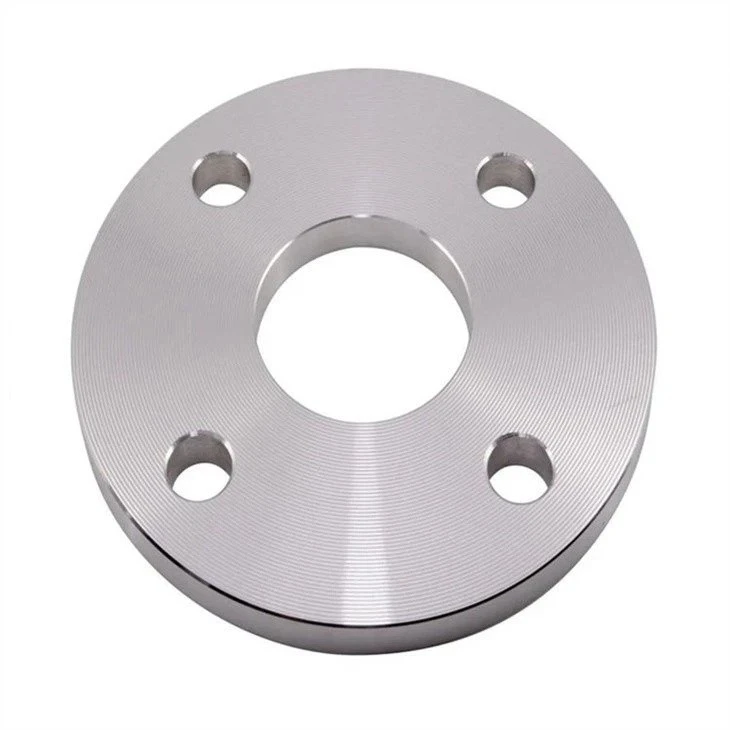
- Iron (Fe): Similar to carbon steel, iron is the main component of stainless steel, usually accounting for more than 50% of the total composition.
- Chromium (Cr): Chromium is the most important alloying element in stainless steel. It forms a passive oxide layer on the surface of the steel, which provides excellent corrosion resistance. The chromium content in stainless steel slip-on flanges typically ranges from 10.5% to 30%.
- Nickel (Ni): Nickel is added to stainless steel to improve its corrosion resistance, ductility, and toughness. It also helps to stabilize the austenitic structure of the steel at room temperature. The nickel content in stainless steel slip-on flanges can range from 0% to 30%, depending on the specific grade of stainless steel.
- Molybdenum (Mo): Molybdenum is added to stainless steel to enhance its pitting and crevice corrosion resistance. It is commonly used in high-alloy stainless steels for applications in harsh environments. The molybdenum content in stainless steel slip-on flanges can range from 0% to 6%.
- Titanium (Ti) and Niobium (Nb): Titanium and niobium are added to some stainless steels to prevent intergranular corrosion. They react with carbon in the steel to form carbides, which reduce the amount of carbon available to form chromium carbides at the grain boundaries. The titanium and niobium content in stainless steel slip-on flanges is usually less than 1%.
There are different grades of stainless steel slip-on flanges available, each with its own specific chemical composition and properties. For example, Stainless Steel Slip On Flange grade 304 contains approximately 18% chromium and 8% nickel, while grade 316 contains about 16% chromium, 10% nickel, and 2% molybdenum.
Chemical Composition of Alloy Steel Slip-on Flanges
Alloy steel slip-on flanges are used in applications where higher strength, toughness, and corrosion resistance are required compared to carbon steel. Alloy steel is a type of steel that contains one or more alloying elements in addition to carbon, such as manganese, silicon, nickel, chromium, molybdenum, and vanadium (V).
- Alloying Elements: The specific alloying elements and their amounts in alloy steel slip-on flanges depend on the desired properties of the flange. For example, adding nickel and chromium can improve the corrosion resistance of the steel, while adding molybdenum and vanadium can increase its strength and hardness.
- Carbon (C): The carbon content in alloy steel slip-on flanges can vary depending on the application. Generally, the carbon content ranges from 0.10% to 0.50%. Higher carbon content can increase the strength and hardness of the steel, but it may also reduce its ductility and weldability.
Alloy Steel Slip On Flange grades are often designated by a specific numbering system, such as ASTM A182. Different grades of alloy steel have different chemical compositions and properties, which are suitable for different applications.
Impact of Chemical Composition on Properties and Applications
The chemical composition of slip-on flanges has a significant impact on their properties and applications.
- Strength and Hardness: The carbon content and the presence of alloying elements such as manganese, chromium, and molybdenum can increase the strength and hardness of the flanges. Higher-strength flanges are suitable for applications where high pressure and heavy loads are involved.
- Corrosion Resistance: The addition of chromium, nickel, and molybdenum in stainless steel and alloy steel flanges provides excellent corrosion resistance. These flanges are widely used in applications where the pipes are exposed to corrosive environments, such as chemical processing plants, oil and gas refineries, and marine applications.
- Weldability: The chemical composition also affects the weldability of the flanges. Flanges with a high carbon content or a large amount of alloying elements may require special welding techniques or preheating to ensure good weld quality.
- Ductility and Toughness: The presence of elements such as nickel and manganese can improve the ductility and toughness of the flanges, making them more resistant to cracking and fracture under impact loads.
Conclusion
In conclusion, the chemical composition of slip-on flanges plays a crucial role in determining their properties, performance, and suitability for different applications. As a slip-on flange supplier, I understand the importance of providing high-quality flanges with the right chemical composition. Whether you need carbon steel, stainless steel, or alloy steel slip-on flanges, I can offer a wide range of products to meet your specific requirements.
If you are interested in purchasing slip-on flanges or have any questions about their chemical composition and applications, please feel free to contact me for more information. I am always ready to assist you in finding the most suitable flanges for your projects.
References
- ASME B16.5 - Pipe Flanges and Flanged Fittings
- ASTM A105 - Standard Specification for Carbon Steel Forgings for Piping Applications
- ASTM A350 - Standard Specification for Carbon and Low-Alloy Steel Forgings, Requiring Notch Toughness Testing for Piping Components
- ASTM A182 - Standard Specification for Forged or Rolled Alloy-Steel Pipe Flanges, Forged Fittings, and Valves and Parts for High-Temperature Service


