


Hey there! As a supplier of Pipe Fittings, I've seen firsthand how Computational Fluid Dynamics (CFD) is revolutionizing the pipe fitting design world. In this blog, I'm gonna dive into the various applications of CFD in pipe fitting design and why it's such a game - changer.
Understanding CFD in a Nutshell
Before we jump into the applications, let's quickly go over what CFD is. CFD is a branch of fluid mechanics that uses numerical analysis and algorithms to solve and analyze problems that involve fluid flows. In simple terms, it helps us understand how fluids - like water, gas, or oil - move through pipes and pipe fittings.
Flow Analysis in Pipe Fittings
One of the primary applications of CFD in pipe fitting design is flow analysis. When designing pipe fittings, it's crucial to know how the fluid will behave inside them. For example, in an Elbow Pipe, the fluid flow changes direction abruptly. This can cause issues like pressure drops, turbulence, and uneven flow distribution.
Using CFD, we can simulate the fluid flow through the elbow pipe. We can visualize how the fluid velocity changes at different points, where the areas of high and low pressure are, and how the turbulence forms. This information is invaluable as it allows us to optimize the design of the elbow pipe. We can adjust the curvature, the angle of the elbow, or the internal surface finish to minimize pressure drops and turbulence. This not only improves the efficiency of the piping system but also reduces the energy consumption required to pump the fluid.
Similarly, for other types of pipe fittings like tees, reducers, and valves, CFD can help us understand the flow patterns. In a tee fitting, for instance, the flow splits into two directions. CFD simulations can show us how the flow divides between the two branches, and if there are any areas of stagnant flow. Based on these results, we can design the tee fitting in a way that ensures an even distribution of the fluid between the branches.
Heat Transfer Analysis
In many industrial applications, the fluid flowing through the pipes may need to be heated or cooled. CFD can be used to analyze the heat transfer process in pipe fittings. For example, in a heat exchanger pipe fitting, we need to ensure efficient heat transfer between the hot and cold fluids.
By using CFD, we can simulate the temperature distribution inside the pipe fitting. We can see how the heat is transferred from the hot fluid to the cold fluid, and where the areas of high and low heat transfer coefficients are. This helps us design the pipe fitting in a way that maximizes the heat transfer rate. We can add fins or other heat transfer enhancement features to the internal surface of the pipe fitting based on the CFD results.

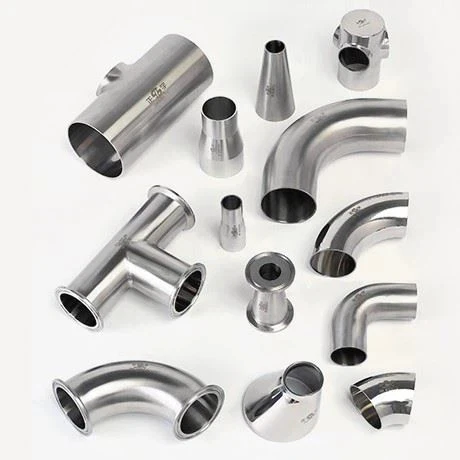
In the case of Elbow Pipe Pvc, which may be used in water - based heating or cooling systems, CFD can also help us understand how the PVC material affects the heat transfer. PVC has different thermal properties compared to metals, and CFD can account for these differences in the simulation.
Structural Integrity and Stress Analysis
Fluid flow through pipe fittings can also cause mechanical stresses on the fittings themselves. High - velocity fluid flow or pressure fluctuations can lead to vibrations and structural damage over time. CFD can be combined with structural analysis tools to assess the structural integrity of pipe fittings.
First, the CFD simulation provides the pressure and force distribution on the internal surface of the pipe fitting due to the fluid flow. This data is then used as input for a structural analysis. The structural analysis tool can calculate the stress and strain levels in the pipe fitting material.
For example, in an industrial setting where large - diameter Industrial Pipe Fittings are used to transport high - pressure fluids, CFD - based structural analysis can help us determine if the material thickness and design of the fittings are sufficient to withstand the stresses. If the analysis shows that the stresses are too high in certain areas, we can modify the design by increasing the thickness or changing the shape of the fitting.
Design Optimization and Cost Reduction
CFD allows us to perform virtual testing of different pipe fitting designs. Instead of building physical prototypes for every design iteration, which can be time - consuming and expensive, we can use CFD simulations to quickly evaluate the performance of different designs.
We can test various design parameters such as the shape, size, and material of the pipe fitting. Based on the CFD results, we can select the design that offers the best performance in terms of flow efficiency, heat transfer, and structural integrity. This not only speeds up the design process but also reduces the overall cost of development.
For example, if we are designing a new type of valve for a piping system, we can use CFD to test different valve geometries. We can compare the performance of a ball valve, a gate valve, and a butterfly valve in terms of flow resistance, pressure drop, and sealing performance. Based on the simulation results, we can choose the most suitable valve design for the specific application.
Environmental Impact Assessment
In today's world, environmental considerations are becoming increasingly important. CFD can be used to assess the environmental impact of pipe fitting designs. For example, in a wastewater treatment plant, the pipe fittings are used to transport the wastewater. CFD can help us analyze if there are any potential leaks or spills in the pipe fittings.
We can simulate the fluid flow in the pipe fittings under different operating conditions, including normal operation and potential fault scenarios. If the simulation shows that there is a risk of leakage in a particular fitting, we can modify the design to improve the sealing performance. This helps to prevent the release of harmful substances into the environment.
Contact Us for Your Pipe Fitting Needs
As a Pipe Fittings supplier, we have extensive experience in using CFD to design high - quality pipe fittings. Our team of experts can use CFD simulations to customize pipe fittings according to your specific requirements. Whether you need pipe fittings for a small - scale plumbing project or a large - scale industrial application, we've got you covered.
If you're interested in learning more about our pipe fitting products or want to discuss a specific project, don't hesitate to get in touch. We're always happy to have a chat and find the best pipe fitting solutions for you.
References
- Anderson, D. A., Tannehill, J. C., & Pletcher, R. H. (1984). Computational Fluid Mechanics and Heat Transfer. McGraw - Hill.
- Versteeg, H. K., & Malalasekera, W. (2007). An Introduction to Computational Fluid Dynamics: The Finite Volume Method. Pearson Education.
- Patankar, S. V. (1980). Numerical Heat Transfer and Fluid Flow. Hemisphere Publishing Corporation.


