


Flanges are crucial components in various industrial applications, serving as a means to connect pipes, valves, pumps, and other equipment to form a piping system. As a flange supplier, I understand the importance of providing high - quality flanges that meet diverse customer needs. In this blog, I will explore the different types of flanges available in the market.
Weld Neck Flanges
Weld neck flanges are one of the most commonly used types of flanges. They are characterized by a long, tapered hub that is welded to the pipe. This design provides excellent stress distribution and is suitable for high - pressure and high - temperature applications. The long neck of the flange acts as a reinforcement, reducing the stress concentration at the weld joint.
Weld neck flanges are often used in industries such as oil and gas, chemical processing, and power generation. They are available in different materials, including carbon steel, stainless steel, and alloy steel. The welding process for weld neck flanges requires skilled welders to ensure a strong and leak - free connection. When you need a reliable flange for critical applications, weld neck flanges are a great choice. You can find high - quality Metal Flange options in our product range, which includes weld neck flanges made from various metals.
Slip - On Flanges
Slip - on flanges are relatively easy to install. They slide over the pipe and are then welded in place on both the inside and outside. This type of flange is less expensive than weld neck flanges and is suitable for low - pressure applications. Slip - on flanges are commonly used in water treatment plants, HVAC systems, and some general industrial piping.
The main advantage of slip - on flanges is their simplicity of installation. They do not require the precise alignment that weld neck flanges do. However, they may not be as strong as weld neck flanges in high - stress situations. Our company offers a wide variety of slip - on flanges in different sizes and materials to meet your specific requirements.

Socket Weld Flanges
Socket weld flanges are similar to slip - on flanges in that they are slipped over the pipe. However, instead of being welded on the outside and inside, they are welded only on the outside. The pipe fits into a socket in the flange, which provides a smooth bore and reduces turbulence in the flow.
Socket weld flanges are typically used in small - diameter piping systems and applications where the flow needs to be smooth. They are commonly found in instrument piping, sample lines, and some small - scale chemical processing systems. These flanges are available in our product catalog, ensuring that you can get the right fit for your project.
Threaded Flanges
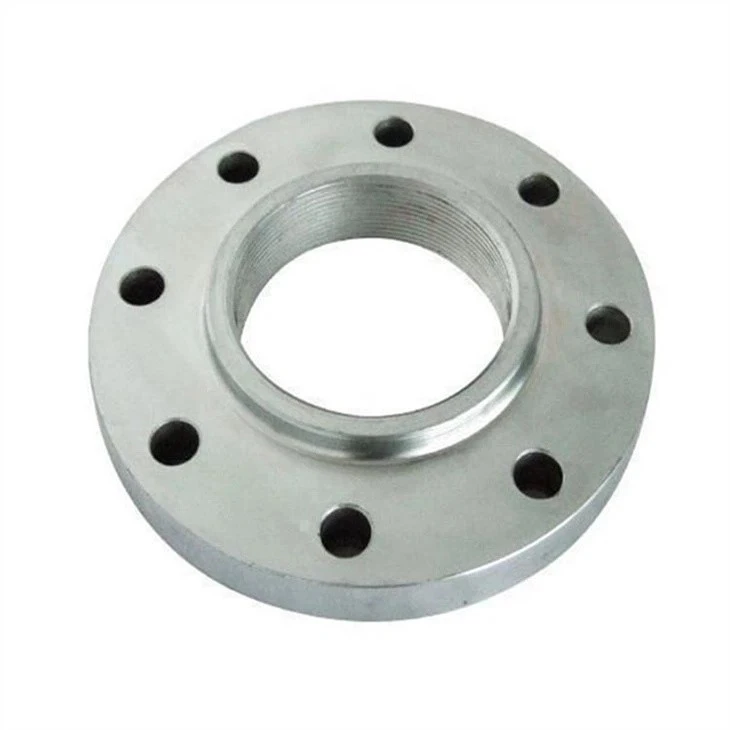
Threaded flanges have internal threads that allow them to be screwed onto a threaded pipe. They are easy to install and do not require welding. This makes them a popular choice for applications where welding is not feasible or desirable, such as in some food and beverage industries where cleanliness is a major concern.
Threaded flanges are suitable for low - pressure and low - temperature applications. They are available in various materials, including brass, stainless steel, and carbon steel. Our threaded flanges are manufactured to high standards, ensuring a tight and secure connection.
Blind Flanges
Blind flanges are used to close the end of a pipe, valve, or vessel. They do not have a center opening, and they are bolted to the flange of the pipe or equipment. Blind flanges are often used for maintenance purposes, allowing access to the inside of the piping system when needed.
In high - pressure applications, blind flanges need to be designed to withstand the pressure without leaking. They are commonly used in oil and gas pipelines, storage tanks, and some chemical processing plants. We offer a range of blind flanges in different sizes and pressure ratings to meet your specific needs.
Lap Joint Flanges
Lap joint flanges consist of two parts: a stub end and a loose flange. The stub end is welded to the pipe, and the loose flange can rotate around the stub end. This design allows for easy alignment during installation, especially in systems where the pipes need to be connected at an angle.
Lap joint flanges are commonly used in systems that require frequent disassembly for inspection or maintenance. They are often found in shipbuilding, offshore platforms, and some industrial piping systems. Our lap joint flanges are made from high - quality materials to ensure long - term performance.
Orifice Flanges
Orifice flanges are used in conjunction with orifice plates to measure the flow rate of fluids in a piping system. They have special openings and connections for pressure taps, which are used to measure the pressure difference across the orifice plate.
Orifice flanges are crucial in industries such as oil and gas, where accurate flow measurement is essential for production control and accounting. We provide orifice flanges that are designed to work seamlessly with standard orifice plates, ensuring accurate and reliable flow measurement.
Ring - Type Joint Flanges
Ring - type joint flanges are used in high - pressure and high - temperature applications, especially in the oil and gas industry. They use a metal ring gasket that fits into a groove in the flange faces. When the flanges are bolted together, the ring gasket is compressed, creating a tight seal.
These flanges are designed to withstand extreme conditions and are often used in pipelines, refineries, and offshore platforms. Our ring - type joint flanges are made from high - strength materials and are manufactured to strict quality standards to ensure a reliable seal in harsh environments.
Full Face Flanges
Full Face Flange is another important type. These flanges have a gasket surface that extends to the outer diameter of the flange. They are commonly used in applications where a large sealing area is required, such as in some water treatment plants and large - scale industrial piping systems. Full face flanges provide a more uniform distribution of pressure across the gasket, reducing the risk of leakage.
Backing Flanges
Backing Flanges are used in combination with other types of flanges, such as lap joint flanges. They provide additional support and reinforcement to the connection. Backing flanges are often used in applications where the piping system is subject to vibration or movement. They help to prevent the loosening of bolts and ensure the integrity of the connection.
In conclusion, as a flange supplier, we offer a comprehensive range of flanges to meet the diverse needs of our customers. Whether you are working on a high - pressure oil and gas project, a low - pressure water treatment system, or any other industrial application, we have the right flange for you. Our flanges are made from high - quality materials, and we adhere to strict manufacturing standards to ensure their performance and reliability.
If you are in need of flanges for your project, we invite you to contact us for a detailed discussion about your requirements. Our team of experts is ready to assist you in selecting the most suitable flanges and providing you with a competitive quote. Let's work together to ensure the success of your piping system project.
References
- ASME B16.5 - Pipe Flanges and Flanged Fittings
- API 6A - Specification for Wellhead and Christmas Tree Equipment
- ISO 7005 - Metallic Flanges for Piping
- EN 1092 - Flanges and their joints - Circular flanges for pipes, valves, fittings and accessories, PN designated.


