


What Does SAWL Stand for? A Comprehensive Interpretation of This Key Pipeline Term
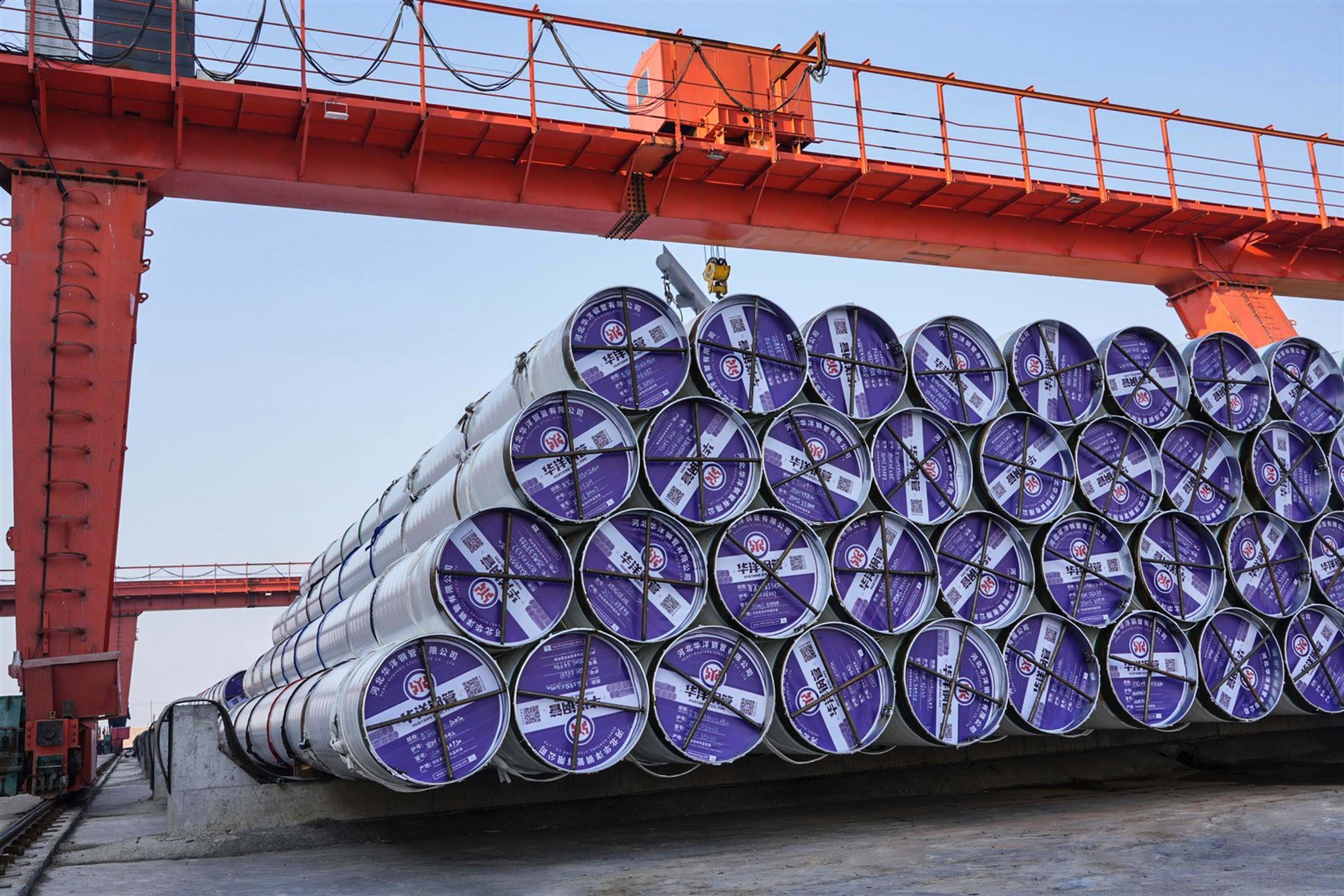
In the field of global pipeline engineering and industrial construction, the term "SAWL" is frequently mentioned in technical documents, project bids and material procurement. For industry insiders, it is a well-known standard term, but for those outside the industry, it often causes confusion. What exactly does SAWL stand for? What are the connotations behind each letter of this abbreviation? How does the technical concept represented by SAWL affect the quality and application of pipelines? This article will comprehensively interpret the meaning of SAWL, from the literal decomposition of the abbreviation to the in-depth analysis of the technical characteristics, helping readers fully grasp this important pipeline industry term.
What Do the Letters in SAWL Stand for Separately?
To understand the meaning of SAWL, the first step is to decompose each letter in the abbreviation. SAWL is the acronym of "Submerged Arc Welded Longitudinal", and when combined with "Pipe" (the complete term is "SAWL Pipe"), it refers to "longitudinal submerged arc welded pipe". Each letter in the abbreviation corresponds to a core technical concept, and the combination of these concepts defines the essential attributes of this type of pipe.
The first letter "S" stands for "Submerged", which means "submerged" or "undercover" in Chinese. In the context of welding technology, it specifically refers to the "submerged arc welding" process, that is, the welding arc is submerged under the granular welding flux during the welding process. This is a key feature that distinguishes submerged arc welding from other welding methods such as open arc welding. The second letter "A" represents "Arc", which is "arc" in Chinese, the core heat source in the welding process that melts the welding wire and the base metal to form a weld. The third letter "W" stands for "Welded", meaning "welded", indicating that the pipe is a welded pipe rather than a seamless pipe formed by other processes.
The fourth letter "L" is the most critical part that distinguishes SAWL from other similar welded pipe terms, representing "Longitudinal", which means "longitudinal" in Chinese. It specifically refers to the direction of the weld of the pipe-the weld is parallel to the axial direction of the pipe. This longitudinal weld design is the core structural feature of SAWL pipes, which directly determines their stress characteristics and application scope. It is precisely because of the combination of these four core concepts that SAWL forms a unique technical term, accurately defining a type of pipe produced by longitudinal submerged arc welding.
What Is the Core Connotation of "Submerged Arc Welding" in SAWL?
The "Submerged Arc Welded" part in SAWL is the core process of pipe production, and its technical characteristics directly affect the quality and performance of the pipe. So, what is the working principle of submerged arc welding? Why is it widely used in the production of large-diameter and thick-walled pipes? Submerged arc welding is a welding method in which the welding arc is burned under the welding flux layer. The welding flux not only plays a protective role, isolating the air from the weld pool to prevent oxidation, but also absorbs the arc light and reduces welding smoke, making the welding process more environmentally friendly and safe.
Compared with other welding methods such as manual arc welding and gas shielded welding, submerged arc welding has obvious advantages in the production of SAWL pipes. First, the welding process is stable, and the parameters such as current, voltage and welding speed can be accurately controlled, which ensures the uniformity of weld quality. The weld compactness can reach 99.9%, effectively avoiding defects such as porosity and incomplete fusion. Second, the welding efficiency is high. Submerged arc welding can use large current welding, and can also adopt multi-wire welding technology, which greatly improves the welding speed and shortens the production cycle. Third, the weld depth is large, which is suitable for welding thick-walled steel plates. SAWL pipes produced by submerged arc welding can have a wall thickness of up to 45mm or more, meeting the needs of high-pressure pipeline projects.
It should be emphasized that the submerged arc welding process in SAWL has strict requirements on welding materials and parameters. The welding flux must be dried at a high temperature (300-400℃ for 2 hours or more) before use to reduce the moisture content to below 0.1%, so as to avoid increasing the hydrogen content in the weld and causing hydrogen-induced cracking. At the same time, the matching of welding wire and welding flux must be consistent with the material of the steel plate to ensure the mechanical properties of the weld.
Why Is "Longitudinal" the Key Feature of SAWL?
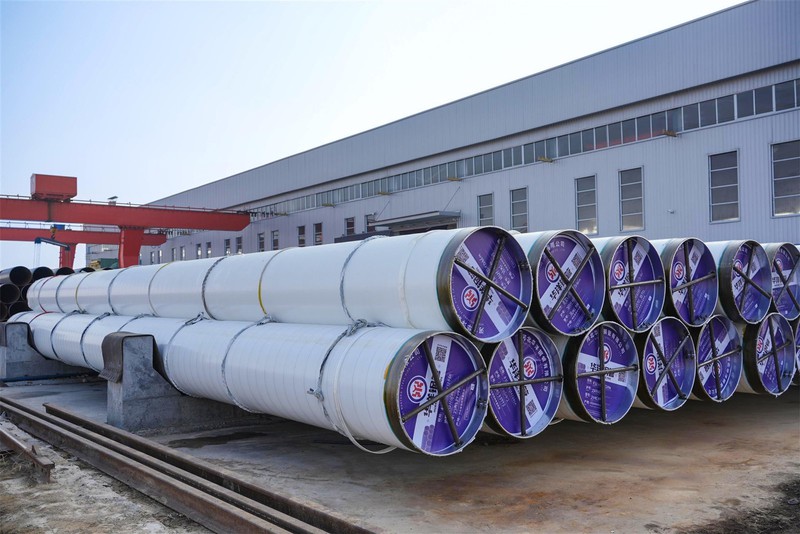
The "Longitudinal" in SAWL defines the direction of the weld, which is the most important feature that distinguishes SAWL pipes from other submerged arc welded pipes (such as SSAW pipes). So, what is the difference between longitudinal welds and other weld directions? What advantages does the longitudinal weld design bring to SAWL pipes? The longitudinal weld of SAWL pipes is parallel to the axial direction of the pipe. When the pipe bears internal pressure (such as in oil and gas transmission), the stress generated by the internal pressure is evenly distributed along the axial direction, and the longitudinal weld can directly bear and disperse this stress, avoiding stress concentration.
In contrast, spiral submerged arc welded pipes (SSAW) have spiral welds that form a certain angle with the axial direction of the pipe. When bearing internal pressure, the stress on the spiral weld is more complex, and stress concentration is likely to occur at the weld, which reduces the pressure-bearing capacity of the pipe. According to the test data of the International Pipeline Research Association, under the same pipe diameter, wall thickness and material grade conditions, the pressure-bearing capacity of SAWL pipes is 15%-30% higher than that of SSAW pipes of the same grade. This advantage makes SAWL pipes the preferred material for high-pressure, long-distance pipeline projects.
In addition, the longitudinal weld design also makes the production process of SAWL pipes more controllable. The length of the longitudinal weld is equal to the length of the pipe, which is shorter than the spiral weld of the same-length SSAW pipe. The shorter weld length reduces the probability of weld defects and simplifies the quality inspection work. At the same time, the longitudinal forming and welding process is more suitable for the production of large-diameter pipes, and can ensure the dimensional accuracy and shape stability of the pipes.
How to Distinguish SAWL from Similar Welding Terms?
In the pipeline industry, there are many terms similar to SAWL, such as SSAW, ERW, etc. These terms are all related to welded pipes, but there are essential differences. To accurately understand the meaning of SAWL, it is necessary to clarify the differences between them. First, SAWL and SSAW. SSAW is the abbreviation of "Spiral Submerged Arc Welded", which refers to spiral submerged arc welded pipes. The core difference between the two is the direction of the weld-SAWL is longitudinal and SSAW is spiral. As mentioned earlier, this difference leads to differences in their stress characteristics and application scenarios. SAWL is suitable for high-pressure, long-distance pipelines, while SSAW is more used in low-pressure, short-distance transportation or general structural purposes due to its low production cost.
Second, SAWL and ERW. ERW is the abbreviation of "Electric Resistance Welded", which refers to electric resistance welded pipes. The core difference between the two is the welding process. ERW uses electric resistance heat to melt the edge of the steel plate for welding, which has high production efficiency but is only suitable for thin-walled steel pipes (wall thickness generally less than 20mm). SAWL uses submerged arc welding, which can weld thick-walled steel pipes and has more stable weld quality, suitable for harsh working environments such as high pressure and corrosion.
It should also be noted that SAWL is sometimes confused with LSAW. In fact, the two terms are essentially the same. LSAW is the abbreviation of "Longitudinal Submerged Arc Welded", which has the same meaning as SAWL. The only difference is the order of the letters, which is caused by different expression habits in different regions and industries. In practical applications, the two terms can be used interchangeably, both referring to longitudinal submerged arc welded pipes.
What Is the Practical Significance of Understanding SAWL for Pipeline Projects?
Understanding the meaning of SAWL is not only a matter of mastering a professional term, but also has important practical significance for the selection, construction and quality control of pipeline projects. For project designers, clarifying the technical characteristics of SAWL can help them select appropriate pipe materials according to the project's pressure, transportation distance and environmental conditions, ensuring the safety and reliability of the project. For example, in long-distance oil and gas transmission projects with high pressure requirements, SAWL pipes are usually the first choice.
For construction units, understanding the production process of SAWL (especially the key points of submerged arc welding) can help them better carry out on-site installation and quality inspection work, ensuring that the welding quality of pipe joints meets the requirements. For procurement personnel, distinguishing SAWL from other similar terms can avoid misunderstandings in material procurement, ensuring that the purchased pipes meet the project design standards. In addition, for relevant regulatory authorities, mastering the technical connotation of SAWL is conducive to formulating more scientific and reasonable industry standards and supervision systems, promoting the healthy development of the pipeline industry.
To sum up, SAWL is not a simple abbreviation, but a concentrated expression of a set of core technologies and structural characteristics in the pipeline industry. From the literal decomposition of each letter to the in-depth understanding of the technical connotation, mastering the meaning of SAWL helps to better understand the performance and application of longitudinal submerged arc welded pipes. With the continuous development of global energy transportation and urban infrastructure construction, SAWL pipes will continue to play an important role, and the understanding of this term will also help more people understand the technical core of the pipeline industry and promote the popularization of industrial knowledge.


