


What Are the Most Common Flange Designs, and How Do They Differ?
Flanges are versatile detachable components that connect pipes, valves, and equipment in piping systems across every industry, from residential plumbing to heavy-duty petrochemical refineries. Their design directly impacts performance, compatibility, and suitability for specific operating conditions-pressure, temperature, fluid type, and maintenance needs. With a wide range of designs available, it's critical to understand which are most common and how they differ. What are the most widely used flange designs in industrial and residential applications? How do their structures, installation methods, and performance capabilities vary? Which design is best suited for different scenarios? This guide, structured with question-based subheadings, breaks down the most common flange designs, highlights their key differences, and explains their ideal applications, tailored to 1200 words for industry technicians, engineers, and learners in 2026.
What Are the Primary Categories of Common Flange Designs?
Most common flange designs are categorized by their installation method, as this is the key factor that differentiates their structure, strength, and use cases. The three primary categories are welded flanges, bolted flanges, and threaded flanges-each with unique sub-designs that cater to specific needs. Welded flanges are permanently attached to pipes via welding, offering superior strength for high-pressure applications. Bolted flanges rely on bolts to connect components, enabling easy disassembly for maintenance. Threaded flanges use internal threads to attach to pipes, eliminating the need for welding and suiting low-pressure setups. These categories form the foundation of flange design, with sub-designs within each category addressing niche requirements.
What Are Welded Flange Designs, and How Do They Differ from Each Other?
Welded flanges are the most robust and widely used in high-pressure, high-temperature (HPHT) systems, as their permanent weld creates a leak-tight, stress-resistant joint. The three most common welded designs are weld-neck, slip-on, and socket-weld flanges, each differing in structure and application.
Weld-neck flanges feature a long, tapered neck that extends from the flange body and is butt-welded to the pipe. This tapered design eliminates sharp edges, reduces stress concentrations at the weld, and ensures a smooth fluid transition-making them ideal for critical systems like petrochemical refineries and offshore pipelines. They are the strongest welded design, capable of withstanding pressure ratings up to Class 2500.
Slip-on flanges are simpler and more cost-effective: they slip over the pipe, with the pipe extending slightly beyond the flange face, and are secured with two fillet welds (one inner, one outer). They lack the tapered neck of weld-neck flanges, making them suitable for low-to-medium pressure applications (Class 150–300), such as water treatment plants and HVAC systems. Their main advantage is ease of installation and lower cost, though they are less strong than weld-neck designs.
Socket-weld flanges have a recessed socket (hollow cavity) where the pipe is inserted, with the pipe end flush with the flange face. A single fillet weld secures the connection, making them ideal for small-diameter pipes (≤2 inches) and high-pressure small-bore systems like instrumentation lines and hydraulic systems. They minimize fluid turbulence but can trap debris, requiring regular inspection.
What Are Bolted Flange Designs, and How Do They Compare?
Bolted flanges are detachable, using bolts to connect to mating flanges or equipment, making them ideal for systems requiring frequent maintenance. The two most common bolted designs are lap-joint and blind flanges, each with distinct purposes and structures.
Lap-joint flanges consist of two parts: a flange ring and a stub end (welded to the pipe). The flange ring slips over the stub end and is secured with bolts, allowing rotation for easy alignment-critical in corrosive environments where the flange ring can be replaced without cutting the pipe. They are lightweight, cost-effective, and suitable for low-to-medium pressure applications (Class 150–300), such as chemical processing plants.
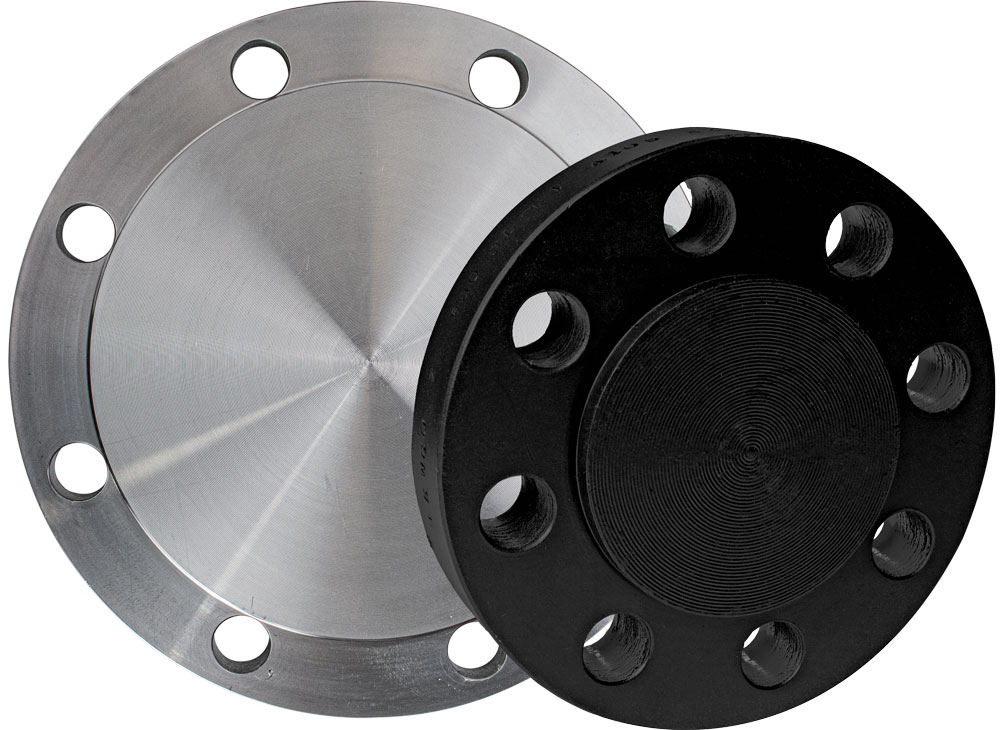
Blind flanges are solid disks with bolt holes around the perimeter, designed to seal the end of a pipe or equipment opening. They have no bore (inner diameter) and are used to cap unused pipe ends, isolate sections for maintenance, or block off equipment. Unlike other flanges, their primary function is sealing, not connecting pipes. They are available in all pressure classes, with thicker designs for high-pressure applications like steam pipelines.
What Are Threaded Flange Designs, and When Are They Used?
Threaded flanges are a simpler, non-welded design, featuring internal threads that match the external threads of the pipe. They are easy to install-just screw the flange onto the pipe-eliminating the need for welding equipment and skilled welders. This makes them ideal for temporary setups, low-pressure systems, or applications where welding is impractical (e.g., tight spaces).
Compared to welded and bolted designs, threaded flanges are less strong and suitable only for low-pressure (Class 150 or lower) and low-temperature applications, such as residential plumbing, small air lines, or temporary industrial setups. Their main limitation is that the threaded joint can leak under high pressure or vibration, making them unsuitable for HPHT or hazardous fluid systems. They are also limited to small-diameter pipes (≤4 inches) due to thread strength constraints.
How Do Flange Face Designs Differ, and Why Does It Matter?
Beyond installation method, flange face design is another key difference between common flange designs, directly impacting seal integrity and gasket compatibility. The most common face designs are raised face (RF), flat face (FF), ring-type joint (RTJ), and tongue and groove (T&G), which are compatible with different flange types.
Raised face (RF) flanges have a raised circular area around the bore, concentrating pressure on the gasket for a tight seal. They are compatible with most flange designs (weld-neck, slip-on, lap-joint) and gasket types, making them the most versatile. Flat face (FF) flanges are smooth and flat, designed for soft gaskets in low-pressure systems, often used with slip-on or threaded flanges in residential and light industrial applications.
RTJ flanges have a groove cut into the face to hold a metal gasket, creating a metal-to-metal seal ideal for HPHT systems (e.g., weld-neck flanges in petrochemical refineries). T&G flanges have a tongue on one flange and a groove on the other, ensuring precise alignment and even pressure distribution-used with weld-neck or lap-joint flanges in medium-to-high pressure applications.
What Key Factors Help Differentiate Which Flange Design to Choose?
The choice of flange design depends on four key factors that highlight their differences: operating pressure and temperature, pipe size, maintenance needs, and cost. Weld-neck flanges are best for high pressure/temperature and large pipes; slip-on for cost-effective, low-to-medium pressure; socket-weld for small-diameter, high-pressure small-bore systems; lap-joint for corrosive, maintenance-heavy setups; blind for capping pipe ends; and threaded for low-pressure, temporary applications.
For example, a petrochemical refinery would use weld-neck RTJ flanges for high-pressure steam lines, while a residential plumber would use threaded or slip-on FF flanges for water pipes. A chemical plant might use lap-joint flanges for corrosive fluid lines, allowing easy replacement of the flange ring without cutting the pipe.
In conclusion, the most common flange designs are weld-neck, slip-on, socket-weld (welded), lap-joint, blind (bolted), and threaded. They differ primarily in installation method, structure, strength, and face design, with each tailored to specific operating conditions. Understanding these differences is critical for selecting the right flange for any application, ensuring compatibility, leak-tight performance, and long-term reliability. By matching the flange design to pressure, temperature, pipe size, and maintenance needs, industry professionals can optimize their piping systems in 2026 and beyond.


