


The Science Behind ERW Welding: How It Works in Pipe Production
Introduction: Unveiling the Science of ERW – Huayang's Technical Core
Electric Resistance Welding (ERW) is more than a manufacturing process-it's a marriage of electrical engineering and materials science that powers the production of electric resistance welded steel pipes worldwide. At Hebei Huayang Steel Pipe Co., Ltd., we don't just use ERW technology; we optimize its scientific principles to create reliable, efficient pipes for civil, agricultural, and light industrial needs.
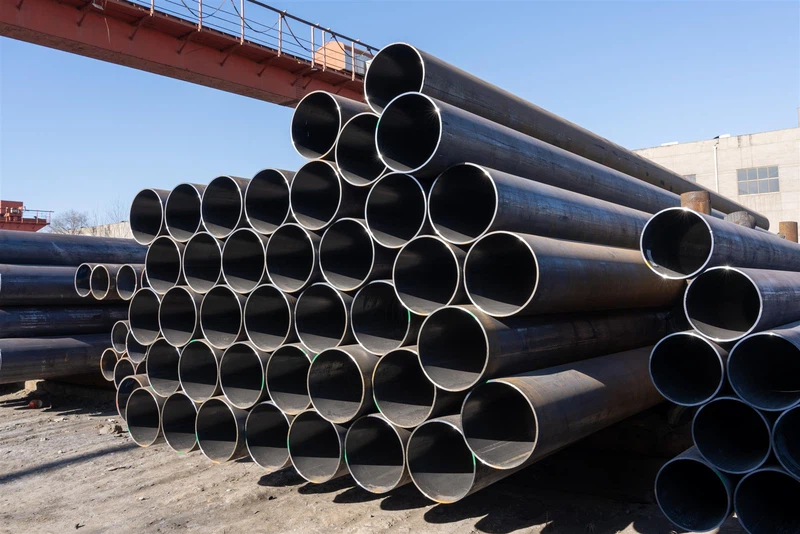
To start with foundational clarity: What is erw pipe? It is an electric resistance welded steel pipe where flat steel coils are shaped into cylinders, and their edges are fused using heat generated by electrical resistance-with erw pipe meaning rooted in this science of energy conversion. While ERW shares the electric resistance welded steel pipe category with HFW (High-Frequency Welding, where hfw meaning refers to 300kHz-500kHz induction heating), its medium-frequency operation (1kHz-3kHz) and direct electrode contact give it unique scientific traits. This article dives into the science behind ERW welding, with a focus on how Huayang applies these principles in real-world pipe production.
The Fundamental Science: Heat Generation via Electrical Resistance
The core of ERW welding lies in converting electrical energy into heat through the resistance of steel-a process governed by basic physics, which Huayang refines to achieve precise fusion.
Ohm's Law: The Driving Force of Heat Production
The Physics of P = I²R
ERW welding relies on Ohm's Law, specifically the power formula P = I²R, where:
P: Heat power (in watts) generated at the weld zone;
I: Electrical current (in amps) passed through the steel strip edges;
R: Electrical resistance (in ohms) of the steel edges.
At Huayang, we calculate this power to hit the exact fusion temperature (1300℃-1400℃) for different steel grades. For example, when producing Φ25×2.77mm ERW pipes (Q235 steel) for the 2024 Baoding Affordable Housing Project, we use a 800kVA transformer to deliver 1000A current. With Q235's edge resistance at ~0.0001 ohms, the heat power reaches 100,000 watts-enough to melt the steel edges without overheating the pipe body.
Why Resistance Is Concentrated at the Edges
Steel's electrical resistance is highest at the strip edges due to two factors:
Contact Resistance: The interface between two strip edges has higher resistance than the steel itself (air gaps and surface irregularities increase resistance);
Edge Geometry: Trimmed edges (Huayang uses ±0.5mm precision shears) have a smaller cross-sectional area, which raises resistance (R ∝ 1/A, where A is area).
This concentrated resistance ensures heat is focused on the weld zone, not wasted on the rest of the strip-critical for energy efficiency.
Material Science: Steel's Behavior at Fusion Temperature
Phase Change and Fusion
When steel reaches 1300℃-1400℃, it undergoes a phase change from solid to a semi-liquid (austenitic) state. This is the "fusion window" where the steel edges can bond without becoming brittle. Huayang's metallurgists test each steel coil to confirm its fusion temperature-for Q345 steel (used in heavy-duty ERW pipes), we target 1350℃ to balance fusion quality and material integrity.
Avoiding Brittleness: Controlling Cooling Rate
After welding, rapid cooling can turn the weld zone into brittle martensite. To prevent this, Huayang uses air cooling (20℃-25℃ ambient temperature) for standard ERW pipes, slowing the cooling rate to 50℃-100℃ per minute. For high-strength ERW pipes (e.g., Φ108×4.5mm for industrial use), we add a low-temperature annealing step (300℃-400℃) to relieve internal stress-ensuring the weld retains 90% of the base metal's toughness.
The Engineering Application: Huayang's ERW Production Line
Turning ERW's scientific principles into real pipes requires precision engineering-Huayang's production line is designed to control every variable in the welding process.
Current and Pressure Control: The Dual Levers of Weld Quality
Variable Frequency Drives for Current Regulation
Huayang uses variable frequency drives (VFDs) to adjust the ERW current in real time (100 adjustments per second). This is critical for handling variations in strip thickness-if a coil's thickness increases by 0.2mm (from 3.0mm to 3.2mm), the VFD automatically boosts current from 1200A to 1350A to maintain heat output. This ensures consistent fusion across the entire coil.
Hydraulic Squeeze Pressure: Ensuring Solid Bonding
Heat alone isn't enough-pressure is needed to force the molten edges together and expel impurities (slag). Huayang's hydraulic squeeze rolls apply 2.0MPa-2.5MPa pressure, calibrated to the pipe's wall thickness:
Thin walls (1.8mm-3.0mm): 2.0MPa (prevents flattening);
Thick walls (3.0mm-12.0mm): 2.5MPa (ensures full fusion).
For the 2023 Henan Irrigation Project's Φ60×3.2mm ERW pipes, 2.2MPa pressure resulted in welds with zero porosity-confirmed by 100% ultrasonic testing.
Forming Science: Shaping Strips into Cylinders
Gradient Rolling: Avoiding Material Stress
Before welding, flat steel strips are shaped into cylinders using 7-9 gradient rolls (Huayang uses 9 rolls for pipes ≥200mm OD). Each roll bends the strip by 5°-15°, gradually forming the cylinder-this avoids sudden bending, which could cause cracks or residual stress. Our roll design is based on the "minimum bend radius" principle (for 3.2mm-thick steel, radius = 5×thickness) to ensure ductility is not exceeded.
Edge Alignment: Laser Guidance for Precision
Misaligned edges lead to uneven welds. Huayang uses laser alignment systems to keep the strip edges parallel (±0.1mm tolerance). The laser projects a red line onto the strip, and a camera feeds real-time data to the forming rolls-if the edge drifts by 0.05mm, the rolls adjust within 0.1 seconds. This technology reduced Huayang's ERW weld defects by 40% in 2024.

Quality Control: Science-Driven Testing to Ensure Reliability
ERW's science doesn't end with welding-Huayang uses scientific testing methods to verify that each pipe meets our standards.
Non-Destructive Testing (NDT): Detecting Invisible Defects
Ultrasonic Testing (UT) for Internal Weld Quality
Huayang performs UT on 20% of standard ERW pipes (100% for critical applications) using 2MHz transducers. The ultrasonic waves travel through the weld-if there's a defect (e.g., a 0.1mm porosity), the waves reflect back, creating a signal on the UT screen. For the 2024 Beijing Office Building's Φ100×3.76mm ERW ventilation pipes, UT detected 2 minor defects (0.08mm porosity), which were cut out and re-welded.
Hydrostatic Testing: Validating Pressure Resistance
Every ERW pipe undergoes hydrostatic testing at 1.5×its rated pressure (e.g., 2.4MPa for 1.6MPa pipes) for 30 seconds. This tests the weld's ability to withstand internal pressure-any leak (detected via pressure drop ≥0.05MPa) means the pipe is rejected. In 2024, Huayang's ERW pipes had a 99.7% pass rate, far above the industry average of 98%.
Mechanical Testing: Verifying Strength and Toughness
Tensile and Bending Tests
Huayang tests 5 samples per batch of ERW pipes:
Tensile Test: Measures the weld's strength-Q235 ERW pipes must reach ≥340MPa (90% of base metal's 375MPa);
Bending Test: Bends the pipe 180° around a mandrel (radius = 3×pipe diameter)-no cracks mean the weld is ductile.
For our Φ25×2.77mm ERW pipes (Baoding project), all samples passed both tests, confirming they could withstand residential water pressure and installation bending.
Comparative Science: ERW vs. HFW Welding
To fully understand ERW's science, it's helpful to contrast it with HFW-another electric resistance welded steel pipe technology.
Heat Generation: Direct Contact vs. Induction
ERW: Uses direct electrode contact to pass current through the steel-heat is generated at the edge interface (resistive heating);
HFW: Uses high-frequency induction coils (no contact) to create eddy currents in the steel-heat is generated throughout the edge (inductive heating).
Huayang uses ERW for pipes where precise edge fusion is key (e.g., thin-wall plumbing pipes) and hfw steel pipes for thicker walls (e.g., Φ114×8.56mm for oil lines), where induction heating ensures deeper penetration.
Energy Efficiency: Medium vs. High Frequency
ERW's medium frequency (1kHz-3kHz) is more energy-efficient than HFW's high frequency (300kHz-500kHz)-Huayang's ERW lines use 200-250kWh/ton, vs. 300-350kWh/ton for HFW. This makes ERW ideal for mass-market projects where cost and energy savings matter.
Conclusion: Science as the Foundation of Huayang's ERW Pipes
The science behind ERW welding-from Ohm's Law heat generation to material phase changes-isn't just theoretical; it's the backbone of every electric resistance welded steel pipe Huayang produces. By mastering and optimizing these scientific principles, we've created a production process that delivers consistent, reliable pipes: from Φ25×2.77mm pipes for affordable housing to Φ108×4.5mm pipes for industrial use.
While hfw steel pipes serve high-pressure needs with their inductive heating science, ERW remains unmatched for mass-market applications, where its energy efficiency, precise fusion, and cost-effectiveness shine. At Huayang, we'll continue investing in ERW's scientific advancement-upgrading VFD systems for better current control, refining annealing processes for tougher welds, and expanding laser alignment for even tighter edge precision-ensuring our ERW pipes stay at the forefront of welded pipe technology. For anyone asking "What is erw pipe?" the answer lies in the science we apply every day to build better infrastructure.


