


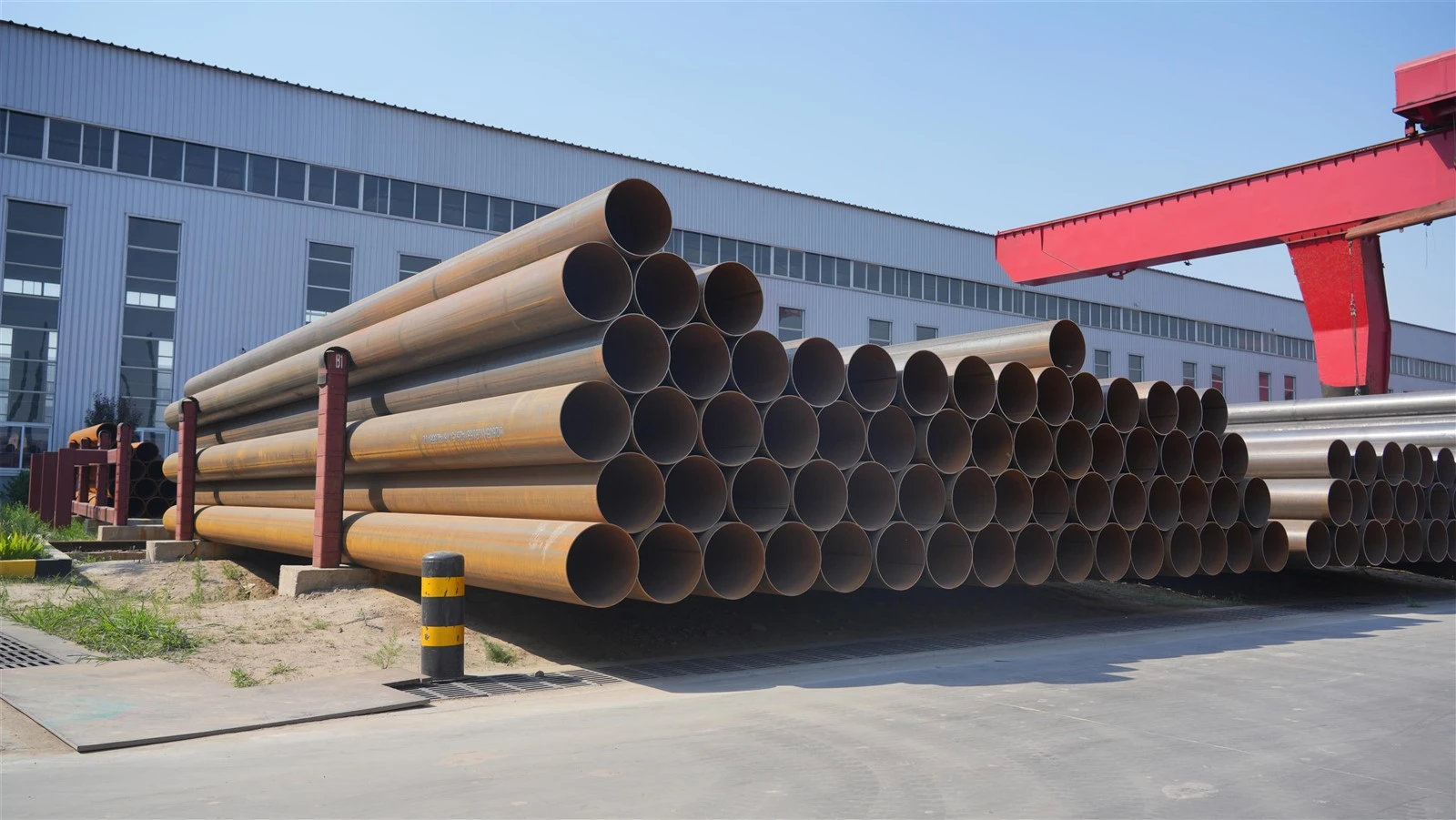
In modern industrial fluid transmission and structural engineering, selecting the appropriate pipeline material is paramount to project safety, efficiency, and longevity. Among the wide array of manufactured steel tubes, welded steel pipes are highly favored for their versatility and cost-effectiveness. However, within the category of longitudinal welded pipes, engineers and procurement specialists frequently encounter two vital technical terms: ERW (Electric Resistance Welded) pipe and EFW (Electric Fusion Welded) pipe.
While both types feature a longitudinal seam and are fabricated from carbon or alloy steel, their manufacturing methodologies, metallurgical bonding processes, size ranges, and application parameters differ significantly. Choosing the wrong type can compromise operational safety or result in unnecessary project overhead. This exhaustive guide provides an in-depth comparison of ERW and EFW steel pipes, exploring their technological mechanics, physical characteristics, and commercial viability to help you make informed engineering decisions.
Deconstructing the Foundations: What is ERW Steel Pipe?
To fully understand the difference between ERW and EFW pipe, we must first analyze the fundamental engineering mechanics behind Electric Resistance Welded (ERW) manufacturing lines.
The ERW Manufacturing Process
ERW steel pipes are manufactured by cold-forming a continuous strip, sheet, or plate of hot-rolled steel into a cylindrical hollow profile. The longitudinal seam is subsequently bonded utilizing high-frequency electric current (typically ranging from 100 kHz to 500 kHz), a sub-category often designated as High-Frequency Welded (HFW) pipe.
As the steel coil passes through sequential forming rollers, high-frequency induction coils or contact shoes transmit electrical energy to the converging edges of the strip. The natural electrical resistance of the steel causes intense localized heat to build up rapidly, bringing the strip edges to a plastic, semi-molten state. At this exact juncture, heavy mechanical squeeze rollers apply immense pressure, forcing the edges together to achieve a solid-state forge weld.
Key Metallurgical Characteristics of ERW Pipes
· No External Filler Metal: A primary characteristic of ERW pipe production is that it does not introduce any foreign consumable materials, such as welding wires or flux. The resulting joint is an integrated fusion of the parent steel itself.
· Weld Flash Removal: The mechanical squeezing process generates excess molten metal extruded both internally and externally along the seam. This excess material, known as weld flash, is systematically shaved off inline using specialized carbon scraping tools, resulting in a smooth and flush surface finish.
· Post-Weld Heat Treatment (PWHT): The localized heat generated during resistance welding alters the microcrystalline structure of the steel adjacent to the seam, creating a Heat Affected Zone (HAZ). To restore uniform grain distribution and mechanical ductility, premium manufacturers subject the seam to inline induction annealing or full-body normalizing.
Deconstructing the Foundations: What is EFW Steel Pipe?
Electric Fusion Welded (EFW) pipe represents a fundamentally different approach to longitudinal seam welding, leaning on traditional arc-welding technology adapted for high-capacity industrial automation.
EFW Manufacturing Process
EFW steel pipes are fabricated primarily from discrete steel plates rather than continuous coils. The individual heavy plate is processed through a sequence of industrial bending machines or heavy presses-often utilizing the JCOE (J-forming, C-forming, O-forming, Expansion) or UOE forming method-to shape the plate into a perfect cylinder.
Once the cylindrical form is secured, the seam is welded utilizing an electric arc process. This is most commonly executed via Submerged Arc Welding (SAW), which can be single-sided or double-sided (DSAW), or Gas Tungsten Arc Welding (GTAW / TIG). The defining mechanic of EFW is the creation of a high-temperature electric arc between a continuous, consumable welding wire and the parent steel plate. The heat of this arc melts both the edges of the plate and the filler wire simultaneously, creating a continuous molten puddle that solidifies into a heavy-duty weld joint.
Key Metallurgical Characteristics of EFW Pipes
· Inclusion of Filler Material: Unlike ERW, EFW welding relies heavily on the introduction of external filler metal (welding wire) and a protective medium (granular flux or shielding gas) to complete the joint.
· Distinct Raised Weld Bead: Because external metal is added to fill the gap between the plate edges, EFW pipes feature a distinct, visible, and raised weld bead along the longitudinal seam, on both the inside and outside diameters.
· Stress Relieving and Expansion: Due to the massive heat input involved in electric fusion welding, EFW pipes undergo extensive post-weld processing. This typically involves mechanical or hydraulic cold expansion to eliminate residual stresses, correct cross-sectional ovality, and ensure superior dimensional straightness across the entire length.
Comprehensive Comparison: ERW vs. EFW Steel Pipes
When evaluating ERW and EFW for specific pipeline architectures, engineering teams must evaluate several critical technical variables.
Raw Material Input and Thickness Caps
ERW Dimensions: ERW pipe production is constrained by the maximum thickness and width of hot-rolled steel coils. Consequently, ERW pipes are usually manufactured in small-to-medium diameters, typically ranging from 1/2 inch to 24 inches, with wall thicknesses generally limited to under 20mm (5/8 inch).
EFW Dimensions: Because EFW lines utilize independent heavy steel plates, they are the ideal choice for large-diameter and ultra-thick pipeline applications. EFW pipes regularly feature outer diameters ranging from 16 inches up to 60 inches or larger, with wall thicknesses easily exceeding 50mm (2 inches).
Heat Input and the Heat Affected Zone (HAZ)
The thermal profiles of these two methodologies differ greatly. ERW uses localized, highly concentrated high-frequency resistance heat that is applied for fractions of a second, resulting in a very narrow Heat Affected Zone. EFW involves continuous, deep-penetration electric arc melting, which introduces substantially more heat into the steel plate. This creates a wider HAZ that requires meticulous thermal management and post-weld heat treatment to prevent grain coarsening and localized embrittlement.
Quality Assurance and Non-Destructive Testing (NDT)
ERW NDT Protocols: Because the ERW weld seam is narrow and flush, quality control lines utilize online automated Ultrasonic Testing (UT) and Eddy Current inspections directly integrated into the production mill.
EFW NDT Protocols: The substantial volume of deposited filler metal in EFW welds increases the risk of internal fabrication defects, such as slag inclusions, porosity, micro-cracks, or lack of root penetration. Consequently, EFW quality assurance requires rigorous, multi-stage testing, combining 100% automated Radiographic Inspection (X-ray) and manual Ultrasonic Testing (UT) along the entire seam.
Application Mapping: Industrial Deployment of ERW and EFW Pipes
Understanding the operational boundaries of each manufacturing style allows procurement managers to allocate resources effectively, ensuring maximum structural safety without over-specifying material costs.
Where ERW Pipes Excel
ERW steel pipes offer excellent geometric uniformity, high concentricity, and superior cost efficiency. They are widely used in low-to-medium pressure systems and structural applications, including:
· Hydrocarbon Transmissions: Low-pressure oil and natural gas gathering lines, refinery piping, and petroleum product transport networks.
· Municipal Infrastructure: Water distribution mains, civil sewage treatment piping, fire sprinkler loops, and HVAC systems.
· Structural Elements: Construction scaffolding, structural columns, mechanical tubing, fencing, and deep foundation piling.
Where EFW Pipes Excel
EFW steel pipes are specifically engineered to withstand severe operating stresses, high-pressure surges, extreme temperatures, and aggressive corrosive chemical environments. Primary deployments include:
· High-Pressure Trunk Lines: Long-distance, large-diameter cross-country natural gas and crude oil transmission pipelines.
· Process Piping: Heavy chemical processing complexes, petrochemical refineries, and high-pressure steam lines in power generation plants.
· Offshore Engineering: Deepwater subsea oil pipelines, structural jackets for offshore drilling rigs, and marine piling projects.
Partnering with a World-Class Global Manufacturer: Hebei Huayang Steel Pipe Co., Ltd.
Navigating the nuances of ERW and EFW procurement requires a manufacturing partner with deep metallurgical expertise, robust production capabilities, and a verified track record of global delivery. Hebei Huayang Steel Pipe Co., Ltd. stands as a premier, large-scale industrial steel pipe manufacturer in China, dedicated to bridging the gap between rigorous engineering standards and commercial optimization.
As a specialized, state-of-the-art factory, Hebei Huayang Steel Pipe Co., Ltd. features an expansive manufacturing infrastructure equipped with 43 advanced production lines. This massive technological array enables us to seamlessly manufacture a diverse portfolio of premium piping products, including high-precision, high-frequency ERW steel pipes and large-diameter longitudinal welded pipes, fully conforming to strict international specifications such as API 5L, ASTM A53, ASTM A252, EN 10219, and ISO certifications.
Our unwavering commitment to rigorous quality control, from automated raw material inspection to comprehensive X-ray and ultrasonic non-destructive testing, has earned the trust of engineering firms worldwide. Today, the high-performance structural and fluid transmission solutions from Hebei Huayang Steel Pipe Co., Ltd. have been successfully exported to 65 countries and regions spanning the Americas, Europe, the Middle East, and Southeast Asia. Whether your project demands high-speed, cost-effective ERW pipelines for municipal networks or heavy-wall, large-diameter tubes engineered for extreme high-pressure industrial environments, Huayang Steel Pipe delivers unparalleled reliability, manufacturing accuracy, and global logistical support to ensure your infrastructure stands secure for decades to come.


