


Hey there! I'm a supplier of pipe fittings, and today I want to chat with you about the creep - resistance properties of pipe fittings.
First off, let me explain what creep is. Creep is the slow and continuous deformation of a material over time under a constant load or stress. In the context of pipe fittings, this can be a huge deal. Pipes and their fittings often operate under a constant pressure, whether it's from the flow of liquid or gas, and over time, this constant stress can cause the material to deform. Imagine if your pipe fittings start to deform - it can lead to leaks, reduced flow efficiency, and even structural failure in some extreme cases.
So, why do we care about the creep - resistance properties of pipe fittings? Well, in industries like oil and gas, where the pipes are under high - pressure and high - temperature conditions for long periods, pipe fittings need to have excellent creep - resistance. The same goes for power generation plants, chemical processing facilities, and many other sectors. If the pipe fittings can't withstand the constant stress and start to creep, it can lead to costly repairs, downtime, and safety hazards.
Now, what factors affect the creep - resistance of pipe fittings?
Material Composition
The material from which the pipe fitting is made is a major factor. For example, stainless steel pipe fittings are known for their relatively good creep - resistance. Stainless steel has a high melting point and a strong atomic structure, which helps it resist deformation under stress. The alloying elements in stainless steel, like chromium and nickel, also contribute to its strength and creep - resistance.
On the other hand, some plastics used in pipe fittings may have lower creep - resistance. Plastics are more likely to deform over time under stress, especially at higher temperatures. However, there are also high - performance plastics that have been engineered to improve their creep - resistance. For instance, PEEK (Polyetheretherketone) is a plastic that has excellent mechanical properties, including good creep - resistance. It can be used in some applications where traditional plastics would not be suitable.
Temperature
Temperature plays a crucial role in the creep behavior of pipe fittings. As the temperature increases, the atoms in the material become more mobile, and the material is more likely to deform under stress. In high - temperature applications, such as in a steam pipeline, the pipe fittings need to be made of materials that can withstand the elevated temperatures without significant creep. For example, in a power plant boiler, the pipe fittings are exposed to extremely high temperatures, and they are usually made of heat - resistant alloys like Inconel or Hastelloy, which have very good creep - resistance at high temperatures.

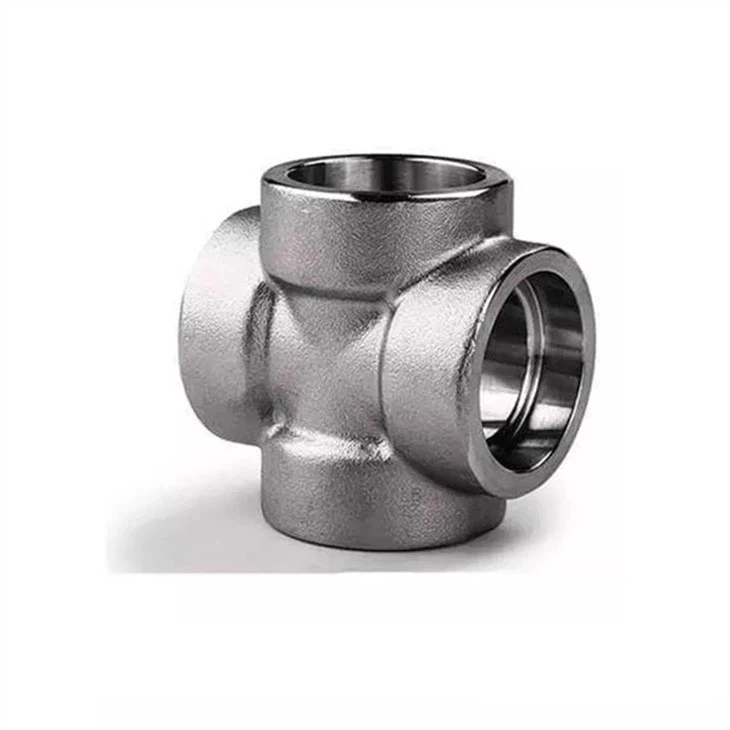
Stress Level
The amount of stress the pipe fitting is subjected to also affects its creep. Higher stress levels will cause the material to creep more rapidly. When designing a piping system, it's important to calculate the expected stress on the pipe fittings accurately. This includes considering factors like the pressure of the fluid inside the pipe, the weight of the pipe and its contents, and any external forces acting on the pipe. If the stress is too high, even a pipe fitting with good creep - resistance may deform over time.
Grain Structure
The grain structure of the material in the pipe fitting can also impact its creep - resistance. A fine - grained material generally has better strength and creep - resistance compared to a coarse - grained one. During the manufacturing process of pipe fittings, techniques like heat treatment can be used to refine the grain structure and improve the material's properties.
Now, let me talk a bit about some of the pipe fittings we offer and their potential creep - resistance.
Coupling Pipe Fitting is a common type of pipe fitting used to connect two pipes together. When choosing a coupling, the creep - resistance is an important consideration, especially if the pipes are under continuous pressure. For example, in a water supply system, a coupling with good creep - resistance can ensure a long - term leak - free connection.
Full Coupling and Half Coupling are variations of coupling pipe fittings. A full coupling is used to connect two pipes end - to - end, while a half coupling is used to connect a pipe to a fitting or a vessel. Depending on the application, the creep - resistance requirements may vary. In a high - pressure industrial pipeline, a full coupling made of a high - strength, creep - resistant material like 316 stainless steel would be a great choice.
Hydraulic Pipe Nipple is another type of pipe fitting. Hydraulic systems often operate under high pressure, and the pipe nipples need to have good creep - resistance to maintain the integrity of the system. A hydraulic pipe nipple made of a suitable alloy can withstand the constant pressure and prevent any leakage or deformation.
As a pipe fitting supplier, we understand the importance of creep - resistance in different applications. We offer a wide range of pipe fittings made from various materials, each selected for its specific properties. Whether you need a pipe fitting for a low - pressure domestic application or a high - pressure industrial one, we can provide the right solution.
If you're in need of pipe fittings and want to discuss the creep - resistance requirements for your project, don't hesitate to reach out. We have a team of experts who can help you choose the most suitable pipe fittings for your needs. We can also provide technical support and advice on installation and maintenance to ensure that your piping system operates smoothly and safely for a long time.
So, if you're looking for reliable pipe fittings with excellent creep - resistance, get in touch with us. Let's have a chat about your project and find the perfect pipe fittings together!
References
- Callister, W. D., & Rethwisch, D. G. (2010). Materials Science and Engineering: An Introduction. Wiley.
- ASM Handbook Committee. (2000). ASM Handbook Volume 2: Properties and Selection: Nonferrous Alloys and Special - Purpose Materials. ASM International.


