


How does coupling affect the user experience of a software application?
In the realm of software engineering and application development, the concept of coupling plays a pivotal and often underestimated role in shaping the user experience of a software application. As a coupling supplier, I have witnessed firsthand how different levels and types of coupling can have far - reaching consequences on how users interact with software.
Understanding Coupling
Coupling refers to the degree of interdependence between different components or modules within a software application. High coupling means that modules are highly dependent on each other, while low coupling implies that modules are relatively independent. There are several types of coupling, including content coupling (where one module directly accesses the internal data of another), common coupling (when multiple modules share global data), control coupling (when one module passes control information to another), and data coupling (where only data is passed between modules).
Impact on Usability
High coupling can lead to serious usability issues. When modules are highly coupled, a small change in one part of the application can have cascading effects on other parts. For instance, if a developer modifies a module that is tightly coupled with many others, unexpected bugs may surface in seemingly unrelated areas. This can result in a frustrating user experience, as users may encounter errors, crashes, or inconsistent behavior.
Imagine a financial application where the user interface (UI) module is highly coupled with the data processing module. If the data processing algorithm is updated to improve its efficiency, and the UI module is not properly isolated, the UI may start to malfunction. Buttons may stop working, data may not be displayed correctly, or the application may even crash. Such issues make the software difficult to use, and users may quickly lose trust in the application.
On the other hand, low - coupled applications are more likely to be user - friendly. Since each module is relatively independent, changes to one module are less likely to affect others. This means that developers can make improvements and bug fixes without causing widespread disruptions. For example, in a well - designed e - commerce application, the shopping cart module can be updated independently of the payment processing module. Users will continue to have a seamless experience while browsing and adding items to the cart even if the payment system is being optimized.

Influence on Performance
The coupling level also has a significant impact on the performance of a software application. High coupling can cause performance bottlenecks. When modules are tightly coupled, they often need to communicate with each other frequently, which can lead to increased latency and resource consumption.
For example, consider a video - streaming application where the video encoding module is highly coupled with the buffering and playback modules. Every time the encoding settings are adjusted, it may trigger a series of requests and responses between these modules. This back - and - forth communication can slow down the overall playback speed and cause buffering issues, leading to a poor viewing experience for users.
In contrast, low - coupled applications can achieve better performance. With independent modules, each module can be optimized separately. For instance, in a large - scale content management system, the search module can be tuned for fast query processing, and the content delivery module can be optimized for high - speed data transfer. Users will experience faster search results and smoother content delivery, enhancing their overall satisfaction.
Effects on Scalability and Maintenance
A software application's scalability and ease of maintenance are also closely related to coupling. High - coupling applications are often difficult to scale. As the user base grows and the application needs to handle more requests and data, tightly - coupled modules can become a bottleneck. Adding new features or expanding the functionality becomes a complex and risky task because of the high interdependence between modules.
For example, a social media application with high coupling between the user profile module and the news feed module may face challenges when trying to introduce new privacy features. Since the two modules are so closely linked, any changes to one may require extensive modifications to the other, which can be time - consuming and error - prone.
Low - coupled applications, however, are more scalable and easier to maintain. Developers can add new modules or features with minimal impact on existing ones. This allows the application to grow and adapt to changing user needs. For example, an online gaming platform can easily introduce new game modes or levels by creating independent modules that interact with the existing core system in a loosely - coupled way. Users will benefit from the continuous improvement of the application without experiencing significant disruptions.
Our Role as a Coupling Supplier
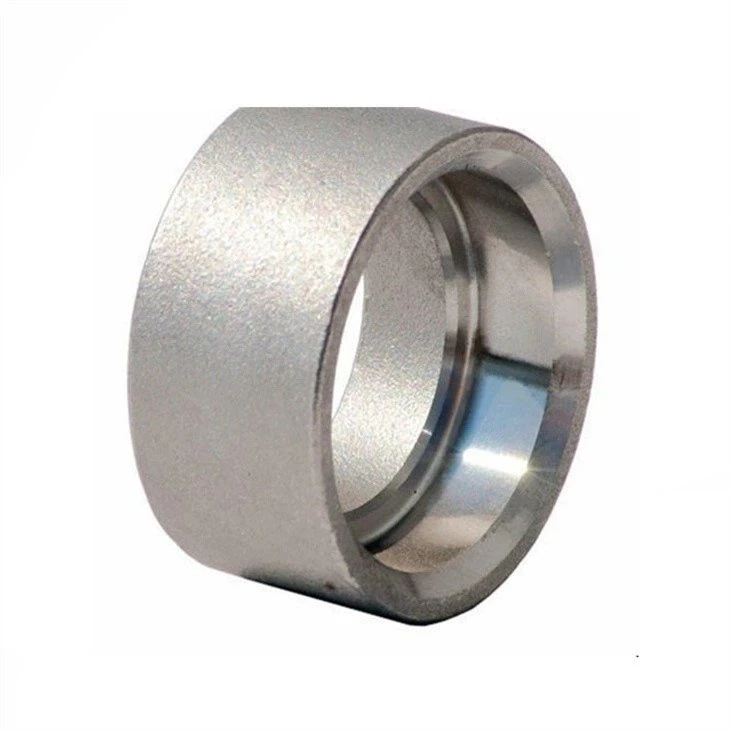
As a coupling supplier, we understand the importance of providing high - quality coupling solutions for software development. We offer a wide range of products, including Steel Half Coupling and Steel Half Coupling, which are designed to ensure reliable and efficient connections between different software components. These couplings are engineered to minimize coupling levels, helping developers build more modular, scalable, and user - friendly applications.
Our Hydraulic Half Couplings are also popular in the industry. They are suitable for applications that require high - performance data transfer and low - latency communication between modules. By using our coupling products, developers can enhance the overall stability and performance of the software, ultimately improving the user experience.
Contact for Purchase and Collaboration
If you are a software developer or a project manager looking to enhance the quality of your software applications, we are here to help. Our coupling solutions can address the challenges posed by high coupling and provide a more seamless user experience. We encourage you to contact us to discuss your specific requirements and explore how our products can be integrated into your software development projects.
References
- Sommerville, I. (2016). Software Engineering. Pearson.
- Pressman, R. S. (2010). Software Engineering: A Practitioner's Approach. McGraw - Hill.
- Gamma, E., Helm, R., Johnson, R., & Vlissides, J. (1994). Design Patterns: Elements of Reusable Object - Oriented Software. Addison - Wesley.


