


Product introduction
Introduction: ASTM Standards – The Global Language of Material Quality
ASTM International (formerly the American Society for Testing and Materials) is a globally recognized standards development organization, publishing over 12,000 voluntary consensus standards covering materials, products, systems, and services. For manufacturers like Hebei Huayang Steel Pipe Co., Ltd.-a leading producer of electric resistance welded steel pipes-ASTM standards are not just compliance guidelines but the foundation of product quality, market access, and customer trust. These standards define critical parameters for electric resistance welded steel pipes, from chemical composition and mechanical properties to manufacturing processes, ensuring consistency across batches and compatibility with global applications.
To contextualize ASTM standards within Huayang's product portfolio: what is erw pipe? It is an electric resistance welded steel pipe formed by fusing steel plate edges via medium-frequency resistance heat (1kHz-3kHz), with erw pipe meaning emphasizing mass production for low-to-medium pressure scenarios-ASTM standards like A53 and A36 directly govern its quality. In contrast, hfw steel pipes (a premium variant of electric resistance welded steel pipes) rely on hfw meaning (High-Frequency Welding, 300kHz-500kHz) for precision, and ASTM standards like A106 Grade B set strict criteria for their high-pressure performance. This article explores the definition, origin, core categories of ASTM standards, and their practical application in Huayang's electric resistance welded steel pipe production.
Definition and Origin of ASTM Standards: From Local Consensus to Global Benchmark
What Are ASTM Standards?
ASTM standards are voluntary, consensus-based documents developed by technical committees comprising manufacturers, users, researchers, and regulators. They are characterized by three core attributes:
Consensus-Driven: Every standard undergoes rigorous review by diverse stakeholders to ensure fairness and technical validity. For example, the ASTM A53 standard for electric resistance welded steel pipes is developed by Committee A01 on Steel, Stainless Steel, and Related Alloys, with input from pipe manufacturers like Huayang and end-users in construction and oil industries;
Performance-Focused: Instead of dictating specific manufacturing methods, ASTM standards set performance requirements (e.g., tensile strength, corrosion resistance) that products must meet. This flexibility allows Huayang to optimize its ERW and hfw steel pipe processes while ensuring quality;
Globally Recognized: While developed in the U.S., ASTM standards are adopted in over 150 countries, serving as a common quality language for cross-border trade. Huayang's electric resistance welded steel pipes compliant with ASTM standards are exported to Europe, Southeast Asia, and the Middle East without additional testing.
The Origin and Evolution of ASTM Standards
Early Beginnings (Late 19th Century)
ASTM traces its roots to 1898, when a group of engineers and scientists gathered in Philadelphia to address inconsistencies in steel rail quality-at the time, varying rail specifications led to frequent train accidents. The first standard, "Standard Specification for Steel Rails," laid the groundwork for uniform material testing. As industrialization expanded, ASTM extended its scope to include pipes, with the first steel pipe standard (ASTM A53) published in 1927-this standard remains critical for Huayang's ERW pipe production today.
Global Expansion (20th–21st Centuries)
Post-WWII, ASTM standards gained international traction as global trade grew. In the 1970s, ASTM introduced standards for high-performance pipes like hfw steel pipes, recognizing the need for stricter criteria for medium-to-high pressure applications. For example, ASTM A106 Grade B (first published in 1955 and revised in 2020) set benchmarks for carbon steel pipes used in power generation and oil transmission-Huayang relies on this standard for its hfw steel pipes supplied to nuclear power auxiliary lines. Today, ASTM updates standards every 5-7 years to reflect technological advancements; Huayang's R&D team monitors these updates to ensure its electric resistance welded steel pipes remain compliant.


Certifications
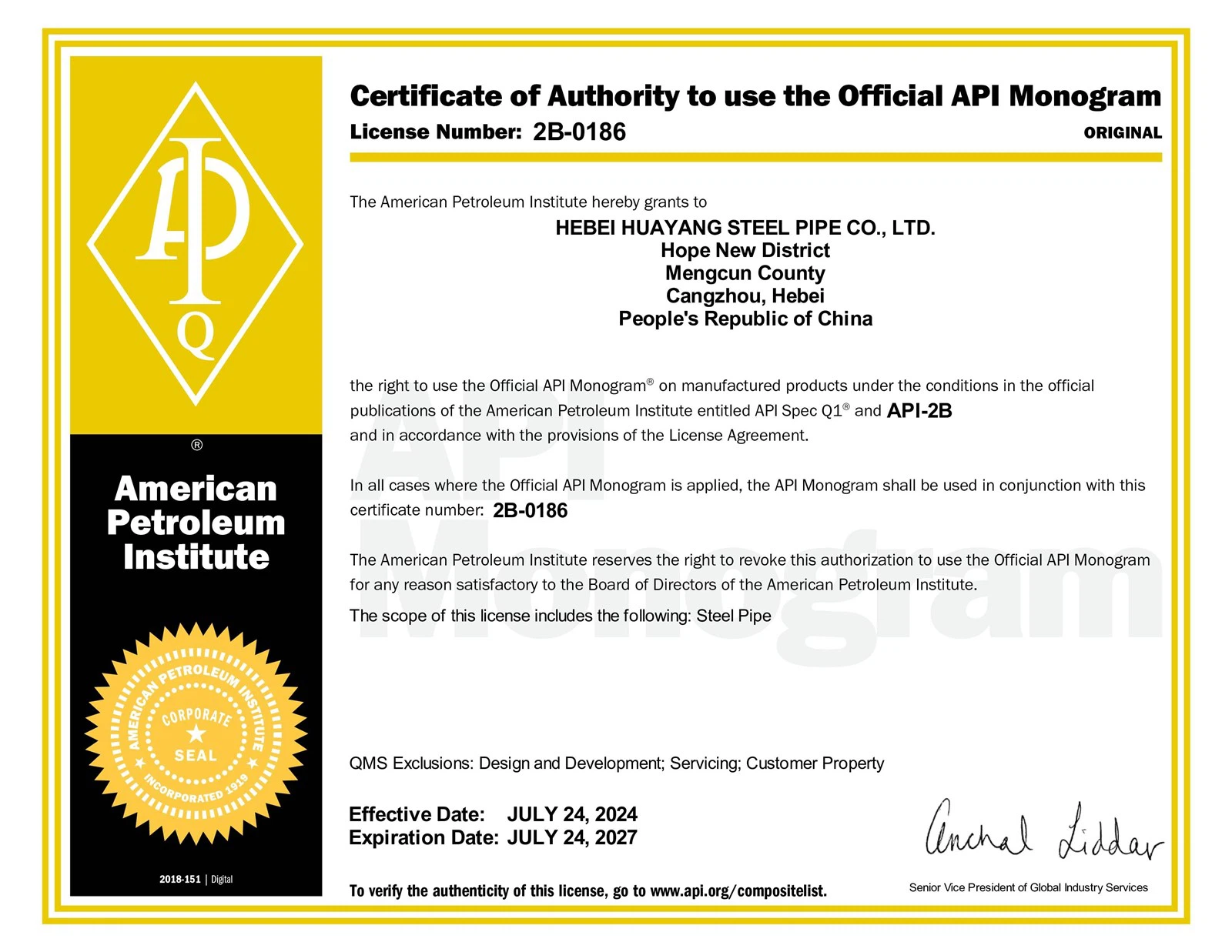
API 2B
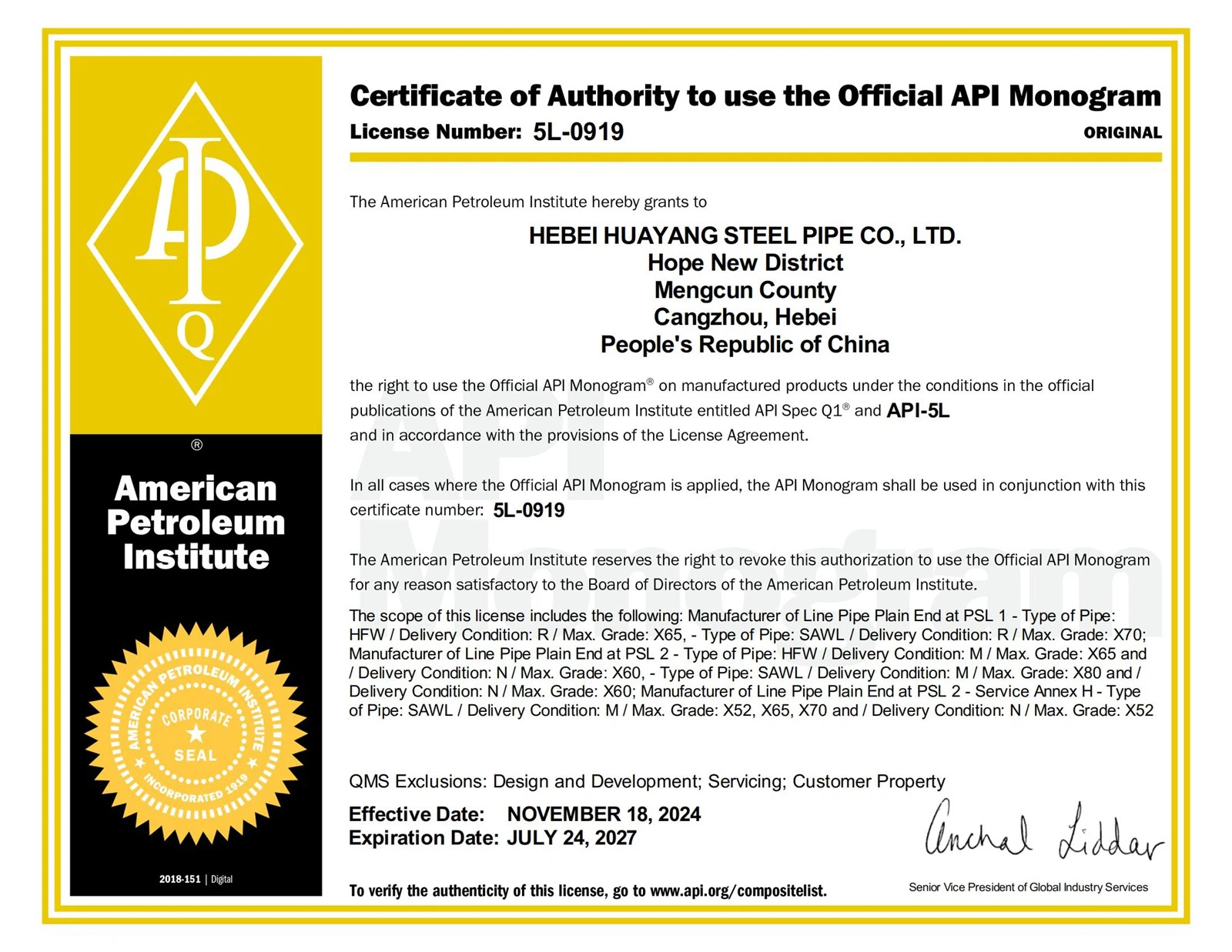
API 5L
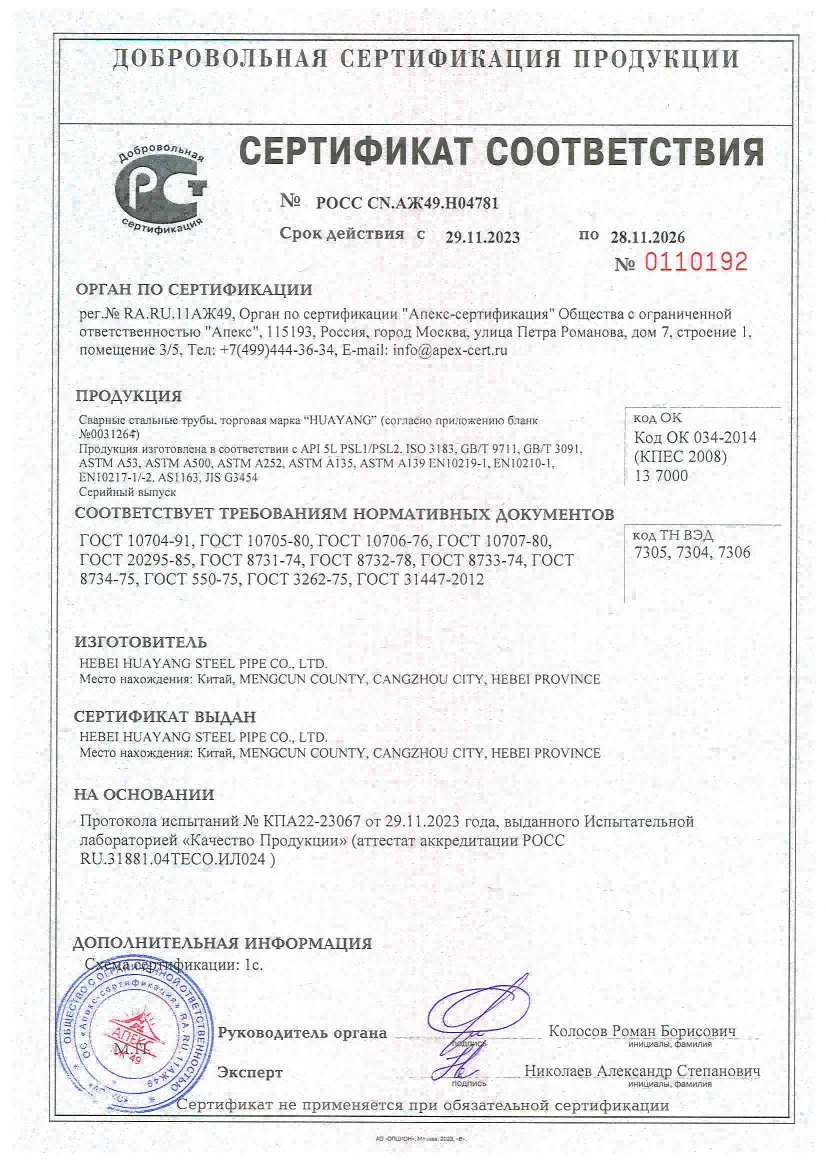
GOST
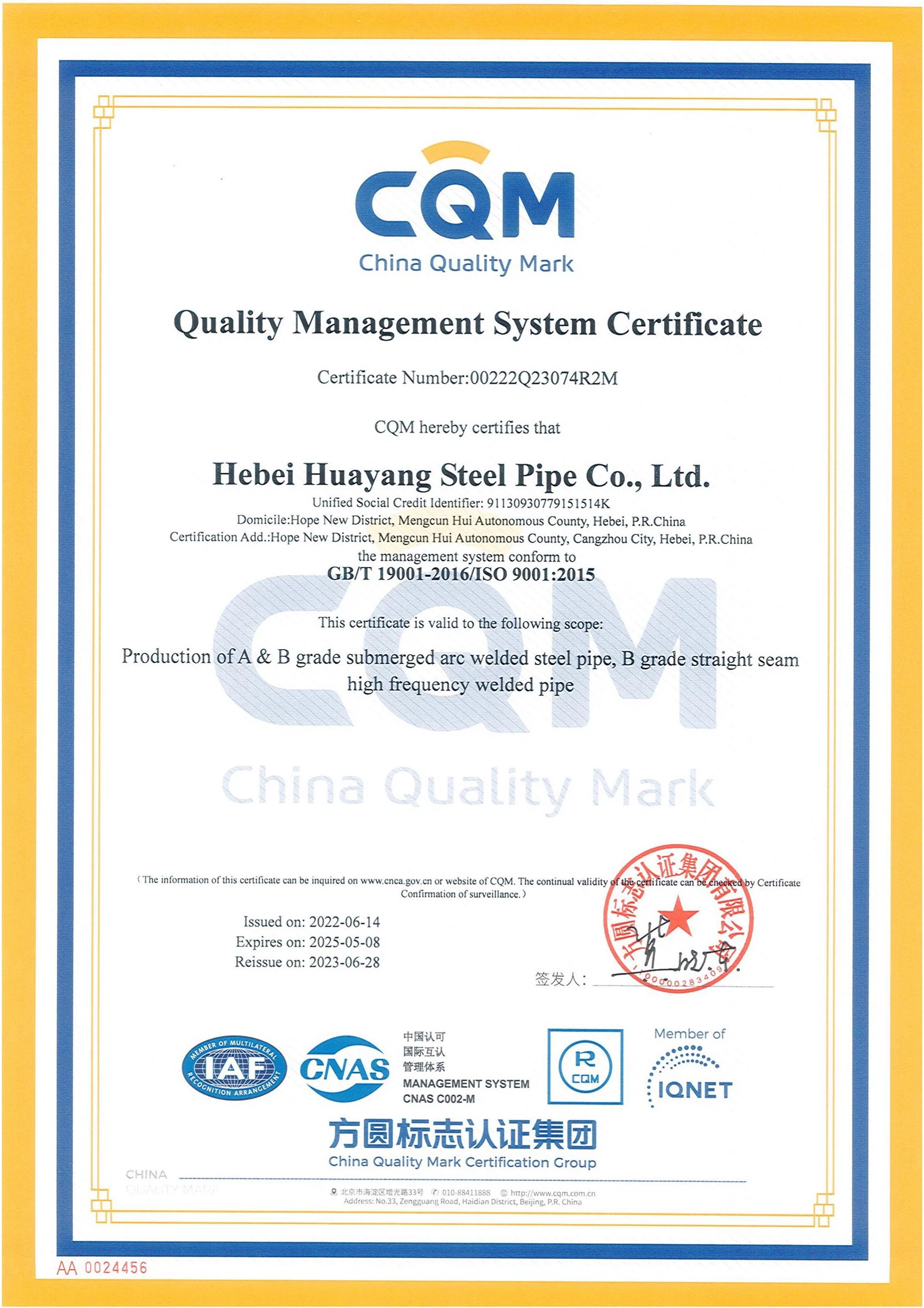
ISO 9001
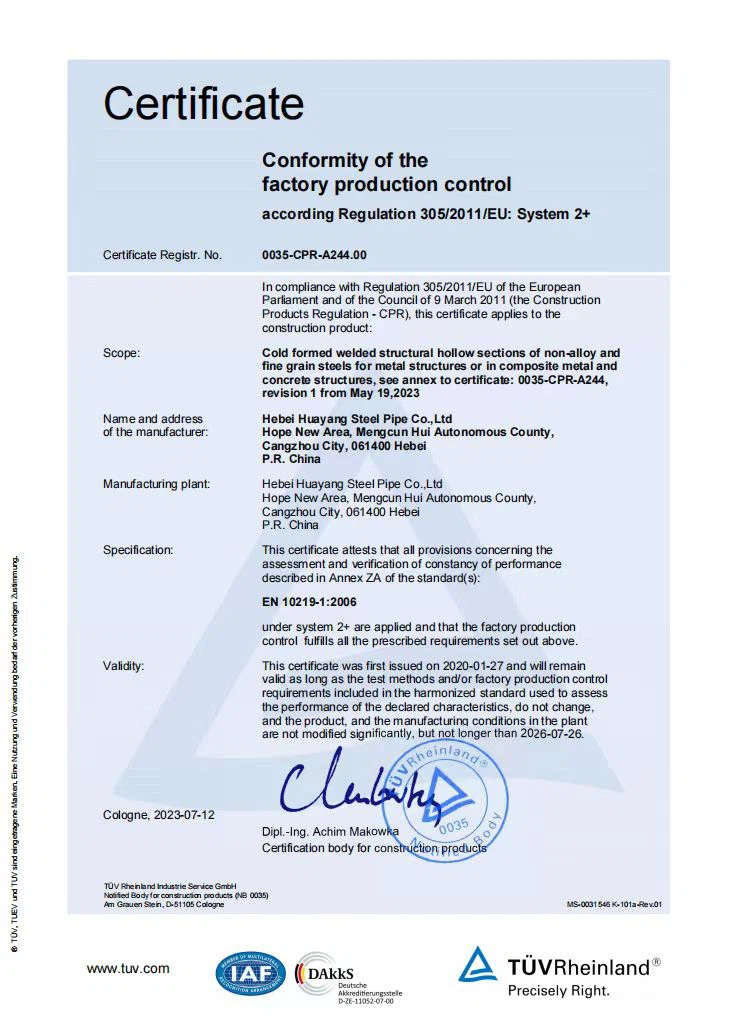
EN 10219
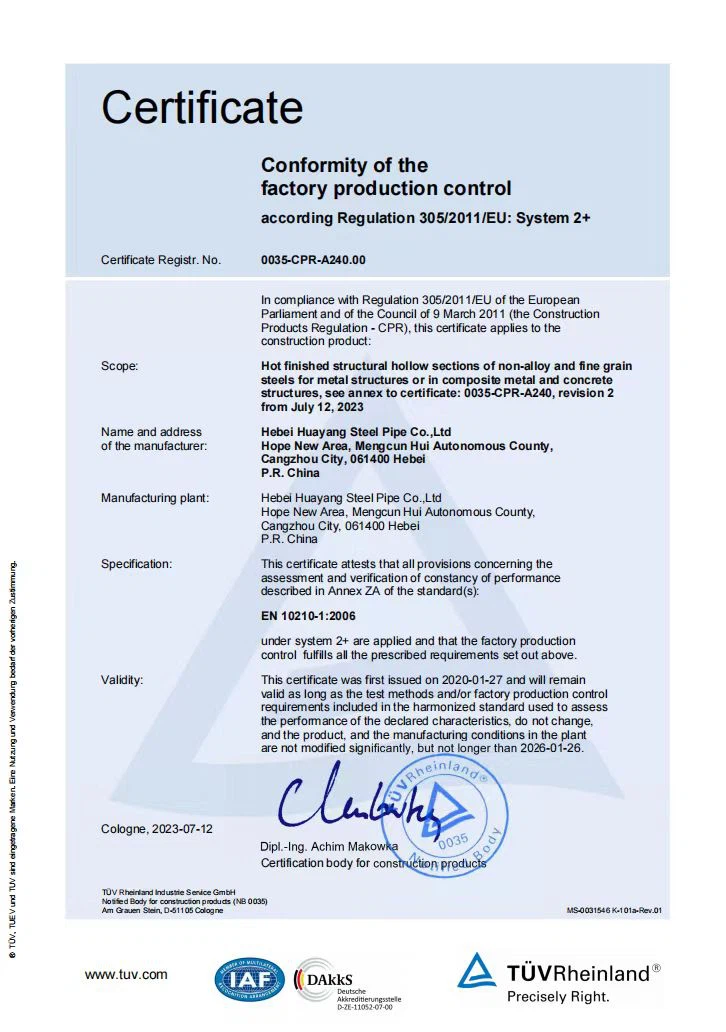
EN 10210
Hot Tags: astm a53 hfw steel pipe, China astm a53 hfw steel pipe manufacturers, suppliers, factory, ERW Line Pipe, ERW Steel Pipe, ERW Welded Pipe, HFW Steel Pipe, MS Black ERW Pipe


