


What Are the Classification and Stacking Standards for Anti-Corrosion Pipes?
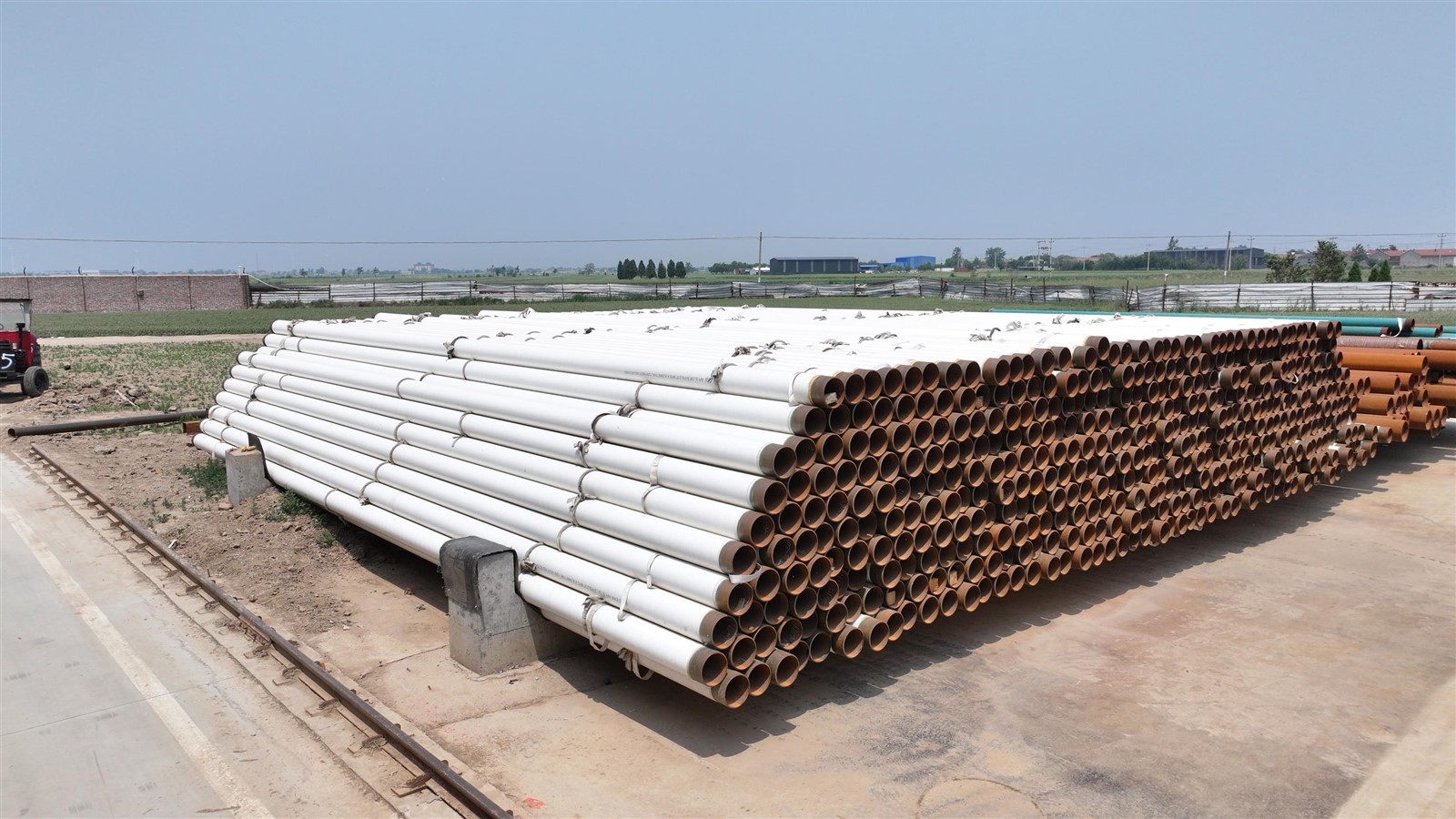
Anti-corrosion steel pipes feature fragile organic coatings, galvanized layers, and resin linings, which are vulnerable to scratches, peeling, extrusion deformation, and secondary corrosion during storage and stacking. Unlike ordinary bare steel pipes, they cannot be stacked randomly regardless of type, specification, and performance. Scientific classification and standardized stacking are core links of on-site material management, which can effectively protect the integrity of anti-corrosion layers, avoid batch quality defects, and ensure that pipes meet installation standards. Without standardized management, mixed stacking and over-height placement will lead to hidden dangers such as coating damage, pipe body deformation, and uneven stress. This article systematically explains the classification rules and stacking standards for anti-corrosion pipes with question-based subheadings, providing standardized guidance for engineering storage management.
Why Is Pre-Stacking Classification Indispensable for Pipe Storage?
Classification is the premise of standardized stacking for anti-corrosion steel pipes. Different types of anti-corrosion pipes have distinct coating hardness, surface friction resistance, temperature adaptability, and structural characteristics. Mixed stacking of different pipe types is the main cause of cross damage and performance failure on construction sites.
For example, hard hot-dip galvanized pipes will leave permanent scratches on soft 3PE and epoxy coatings during stacking and handling. Coal tar pitch coated pipes may cause surface contamination to clean water-grade epoxy-lined pipes, resulting in unqualified water-contact performance. In addition, pipes with different diameters, wall thicknesses, and batch specifications have different stress-bearing capacities. Random mixing will cause unbalanced extrusion, leading to local deformation of thin-walled pipes and crushing of anti-corrosion layers. Therefore, strict classification before stacking is essential to eliminate quality risks from the source.
What Are the Core Classification Standards for Anti-Corrosion Pipes?
On construction sites, anti-corrosion steel pipes must be classified and stored according to four core dimensions: anti-corrosion type, pipe specification, processing status, and engineering usage. This multi-dimensional classification ensures neat storage and avoids cross-quality impact.
First, classify by anti-corrosion process. 3PE external anti-corrosion pipes, internal epoxy lined pipes, galvanized pipes, coal tar pitch anti-corrosion pipes, and stainless steel composite pipes must be stored in independent areas without mixing. Second, classify by specification, including outer diameter, wall thickness, and pipe length. Pipes of different sizes bear different stacking pressures, and separate placement prevents small-diameter pipes from being crushed and deformed.
Third, classify by processing status. Finished qualified products, semi-finished products to be repaired, and defective pipes must be placed in partitioned areas with clear marks to avoid mixing unqualified products into construction materials. Fourth, classify by usage scenario. Pipes for drinking water, sewage, chemical media, and fire control systems should be stored separately to prevent cross-contamination and ensure usage compliance.
What Are the Standard Layered Stacking Rules for Anti-Corrosion Pipes?
After scientific classification, anti-corrosion pipes must follow standardized layered stacking rules to ensure uniform stress, stable placement, and intact protective layers. Unlike ordinary steel pipes that can be piled arbitrarily, anti-corrosion pipes require cushioning, alignment, and anti-slip measures for each layer.
All stacked pipes must be placed on flat sleepers or rubber cushion supports to achieve complete isolation from the ground. The spacing of sleepers should be uniform and matched with the pipe length to avoid local suspension and stress concentration. Each layer of pipes should be arranged neatly and closely without random crossing and dislocation. For circular steel pipes, staggered layered stacking is adopted to improve the overall stability of the pipe stack and prevent rolling and collapse.
In addition, soft isolation materials are required between individual layers for high-grade anti-corrosion pipes such as epoxy lined pipes and 3PE pipes. Rubber gaskets or soft cloth pads can effectively avoid hard friction between pipe bodies and prevent coating scratches and peeling during stacking and slight vibration.
What Is the Safe Stacking Height for Different Anti-Corrosion Pipes?
Stacking height limitation is a key standard to prevent extrusion damage and stack collapse. Excessively high stacking will cause excessive pressure on the bottom pipes, resulting in coating compression failure, pipe body bending, and permanent deformation. Different types and diameters of anti-corrosion pipes have clear height limits based on their structural strength and coating bearing capacity.
For large-diameter thick-walled 3PE buried anti-corrosion pipes, the maximum stacking height shall not exceed 1.5 meters. For medium and small-diameter ordinary anti-corrosion pipes, the height is controlled within 1.2 meters. For thin-walled epoxy lined pipes and water-grade anti-corrosion pipes with fragile inner and outer coatings, the stacking height must be limited to 1 meter or less to minimize extrusion pressure.
Meanwhile, temporary stacking during construction shall follow lower height standards. In rainy and windy weather, the stacking height should be appropriately reduced, and binding and fixing measures should be added to prevent the pipe stack from collapsing, which may cause mass damage to anti-corrosion layers.
What Partition and Identification Standards Should Be Followed?
Standard stacking not only requires neat placement but also complete partition and identification management to improve material turnover efficiency and avoid misuse. The storage yard must set up fixed partition areas with obvious isolation belts to clarify the storage range of different pipe types.
Each independent stacking area shall be equipped with a standard identification card, marking key information including pipe type, specification, anti-corrosion process, production batch, incoming date, and applicable project. This management method effectively prevents workers from misusing pipes with different anti-corrosion grades, avoiding quality accidents caused by mismatched material selection.
In addition, a dedicated passage must be reserved between each stacking area to facilitate daily inspection, ventilation, and manual handling. It is forbidden to occupy the passage for secondary stacking, so as to avoid collision damage during material transportation.
What Stacking Behaviors Are Strictly Prohibited?
To fully protect anti-corrosion pipes, the engineering industry has clearly defined prohibited stacking behaviors. Random irregular operations are the main cause of coating damage during storage.
First, mixed stacking of different types and different specifications is strictly prohibited to prevent cross scratch and extrusion damage. Second, over-height stacking and heavy pressing are forbidden; no construction sundries, steel parts, or heavy equipment shall be placed on the pipe stack. Third, inclined stacking and single-point suspension placement are not allowed, which will cause uneven stress and pipe body deformation.
Fourth, direct contact between pipes and sharp ground impurities is prohibited. Fifth, long-term compact stacking without gaps is forbidden, which will lead to poor internal ventilation, humid accumulation, and coating mildew and blistering.
Conclusion
In summary, the classification and stacking standards for anti-corrosion pipes cover scientific pre-storage classification, standardized layered placement, safe height control, partition identification management, and forbidden operation specifications. Classification ensures no cross damage and material confusion, while standardized stacking maintains the integrity of anti-corrosion coatings and pipe structural stability. Implementing these standards can effectively avoid storage quality defects, reduce repair and scrapping costs, and ensure that anti-corrosion steel pipes maintain stable performance before installation. Strict classification and stacking management are essential guarantees for high-quality pipeline engineering construction.


