


What Are the Basic Definitions and Manufacturing Process Differences?
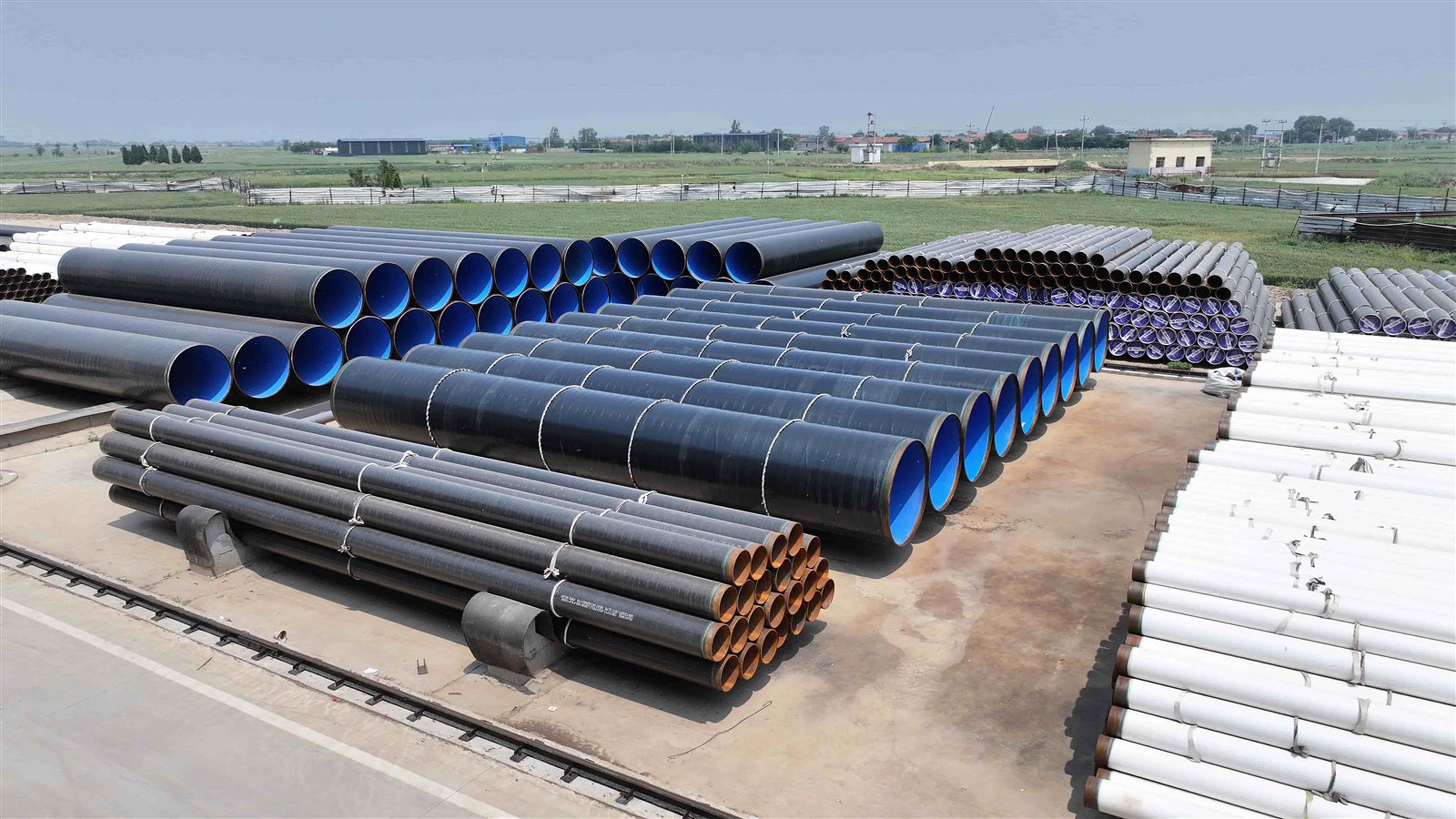
Steel pipes are essential structural and conveying materials widely used in construction, water supply and drainage, petrochemical industry, and municipal engineering. Corrosion is the biggest threat to steel pipe performance, which can cause pipe wall thinning, structural damage, medium leakage, and shortened service life. To solve the corrosion problem, galvanized steel pipes and anti-corrosion steel pipes are the two most mainstream anti-rust steel pipe products in the market. Most engineering and procurement personnel easily confuse the two pipes because they both have anti-corrosion capabilities. However, they have essential differences in basic definitions, product attributes, and core manufacturing processes. These fundamental differences also determine their subsequent performance gaps and application boundaries. This article will deeply analyze the two steel pipe products through hierarchical discussion, focusing on their definition connotations and manufacturing process characteristics.
What Is the Core Definition of Galvanized Steel Pipes?
A galvanized steel pipe is a single-function anti-corrosion steel pipe with a single zinc coating as the only protective layer, belonging to a single standardized anti-rust steel pipe product. Its base materials are mostly ordinary carbon steel pipes such as Q235B and Q345B, including seamless steel pipes and welded steel pipes with conventional specifications. The core design concept of galvanized steel pipes is to rely on metal zinc's chemical activity to form a protective layer on the steel surface, realizing anti-rust protection through metal sacrificial corrosion. It is a traditional and mature anti-corrosion steel pipe with a single protection form and fixed structural attributes. Unlike general anti-corrosion steel pipes, galvanized steel pipes have no diversified structural changes. All products follow a unified protection logic, that is, covering the steel matrix with a zinc layer to isolate external corrosive media and provide electrochemical protection. Its product positioning is clear, mainly for conventional mild environment anti-corrosion scenarios with low cost and standard service life requirements.
What Is the Core Definition of Anti-Corrosion Steel Pipes?
Different from the single attribute of galvanized steel pipes, anti-corrosion steel pipes are a broad general category covering all steel pipes with professional anti-corrosion coating treatment, rather than a single fixed product. Its base materials are more diverse, including ordinary carbon steel pipes, alloy steel pipes, thick and thin-walled seamless steel pipes, and spiral welded steel pipes, which can adapt to different engineering pressure and load requirements. The core definition of anti-corrosion steel pipes is to coat the inner and outer walls of steel pipes with high-performance chemical anti-corrosion materials according to different service environments, conveying media, and durability standards, forming one or multiple layers of composite protective structures. This product category includes 3PE anti-corrosion steel pipes, epoxy coal tar pitch anti-corrosion steel pipes, polyurethane anti-corrosion steel pipes, and cement mortar lining anti-corrosion steel pipes. Each branch product has independent structural characteristics and anti-corrosion orientations, making it a diversified and customized anti-corrosion steel pipe system for complex working conditions.
What Are the Characteristics of Galvanized Steel Pipe Manufacturing Processes?
The manufacturing process of galvanized steel pipes is simple, standardized, and highly mature, mainly divided into two types: hot-dip galvanizing and electro-galvanizing. Hot-dip galvanizing is the mainstream industrial process with better protection effects. The manufacturing steps are standardized and streamlined: first, the surface of the raw steel pipe is polished, derusted, and degreased to remove oxide layers, oil stains, and impurities to ensure the adhesion of the zinc layer. Then, the cleaned steel pipe is immersed in high-temperature molten zinc liquid at about 450 degrees Celsius. Through physical infiltration and chemical reaction, zinc molecules are tightly combined with the steel matrix to form a thick, uniform, and firm zinc alloy protective layer. Finally, cooling, trimming, and anti-oxidation finishing are carried out to complete production.
Electro-galvanizing is a lightweight and low-cost processing technology. It adopts the electrolysis principle, placing the steel pipe and zinc plate in the electrolyte solution, and attaching a thin zinc layer to the pipe surface through current transmission. This process has simple operation, low equipment requirements, and fast production speed, but the zinc coating is thin and poor in wear resistance. Overall, the galvanizing process has low technical thresholds, high production efficiency, and stable product quality, suitable for large-scale batch standardized production.
What Are the Characteristics of Anti-Corrosion Steel Pipe Manufacturing Processes?
The manufacturing process of anti-corrosion steel pipes is diversified, customized, and multi-layered, with higher technical complexity and stricter production standards. Taking the most widely used 3PE anti-corrosion process as an example, the production requires three precise coating procedures to form a composite protective structure. The first layer is epoxy powder primer, which tightly adheres to the steel pipe matrix to enhance bonding force and resist chemical corrosion. The second layer is an adhesive transition layer, which connects the primer and the outer protective layer to avoid coating peeling. The third layer is a polyethylene outer protective layer, which provides physical wear resistance, impact resistance, and isolation protection.
Other processes also have professional production specifications. Epoxy coal tar pitch anti-corrosion pipes adopt multi-time brushing and curing processes to form a compact anti-corrosion film, suitable for sewage and humid soil environments. Cement mortar lining anti-corrosion pipes complete inner wall protection through mechanical spraying and natural curing, targeting water supply and drainage engineering. All anti-corrosion processes require strict control of coating thickness, curing temperature, and construction environment. The production cycle is longer, and the process precision is far higher than that of galvanized pipes, realizing targeted anti-corrosion design for different harsh environments.
What Is the Essential Process Difference Between the Two Steel Pipes?
In essence, the manufacturing difference between the two lies in single-layer metal protection versus multi-layer composite chemical protection. Galvanized steel pipes rely on a single metal zinc layer for electrochemical anti-corrosion, with a unified process and single protection mechanism. Anti-corrosion steel pipes rely on customized multi-layer chemical coating structures to physically isolate corrosive media, with flexible and changeable processes and targeted protection mechanisms. This fundamental process difference directly leads to their subsequent differences in anti-corrosion performance, service life, and application scenarios, becoming the core basis for engineering selection.


